
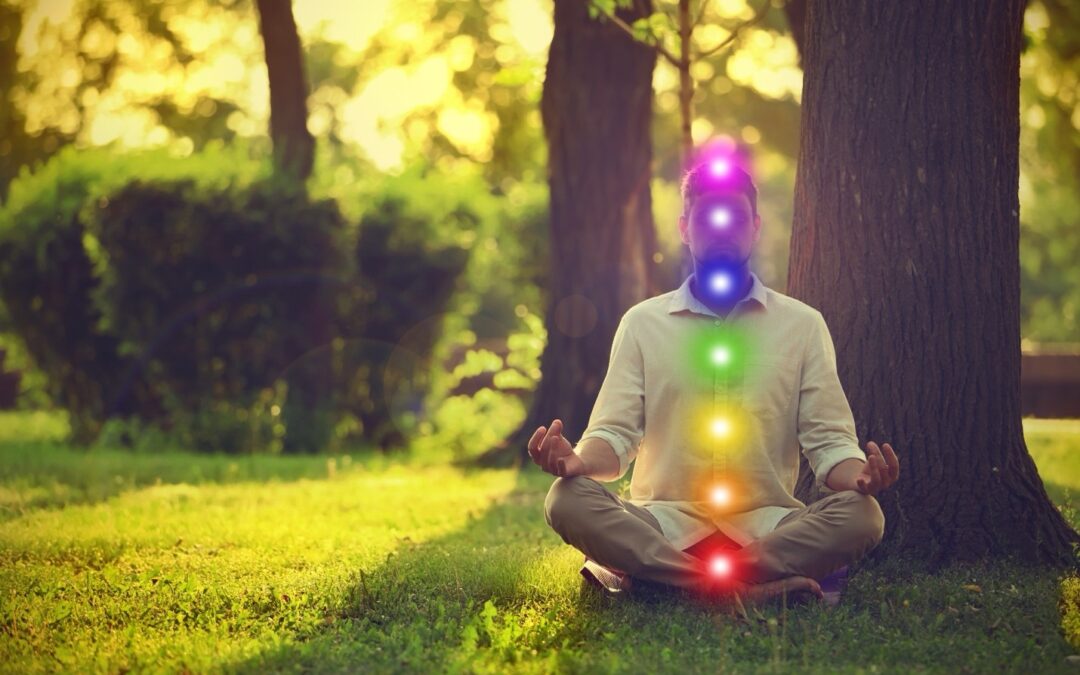
Chakras have become mainstream wellness vocabulary. You’ll hear them mentioned in yoga studios, meditation apps, and crystal shops. But their role in Tantra, the ancient spiritual tradition from which they originate, remains widely misunderstood. Many people associate Tantra solely with sexuality, missing the profound system for spiritual transformation that works directly with these energy centers.
In Tantra, the seven chakras are not just colorful symbols on yoga pants. They represent a complete map of human consciousness, running from the base of the spine to the crown of the head. Each chakra governs specific aspects of our physical, emotional, and spiritual lives. Understanding them opens doors to deeper self-awareness, healing, and ultimately, spiritual awakening.
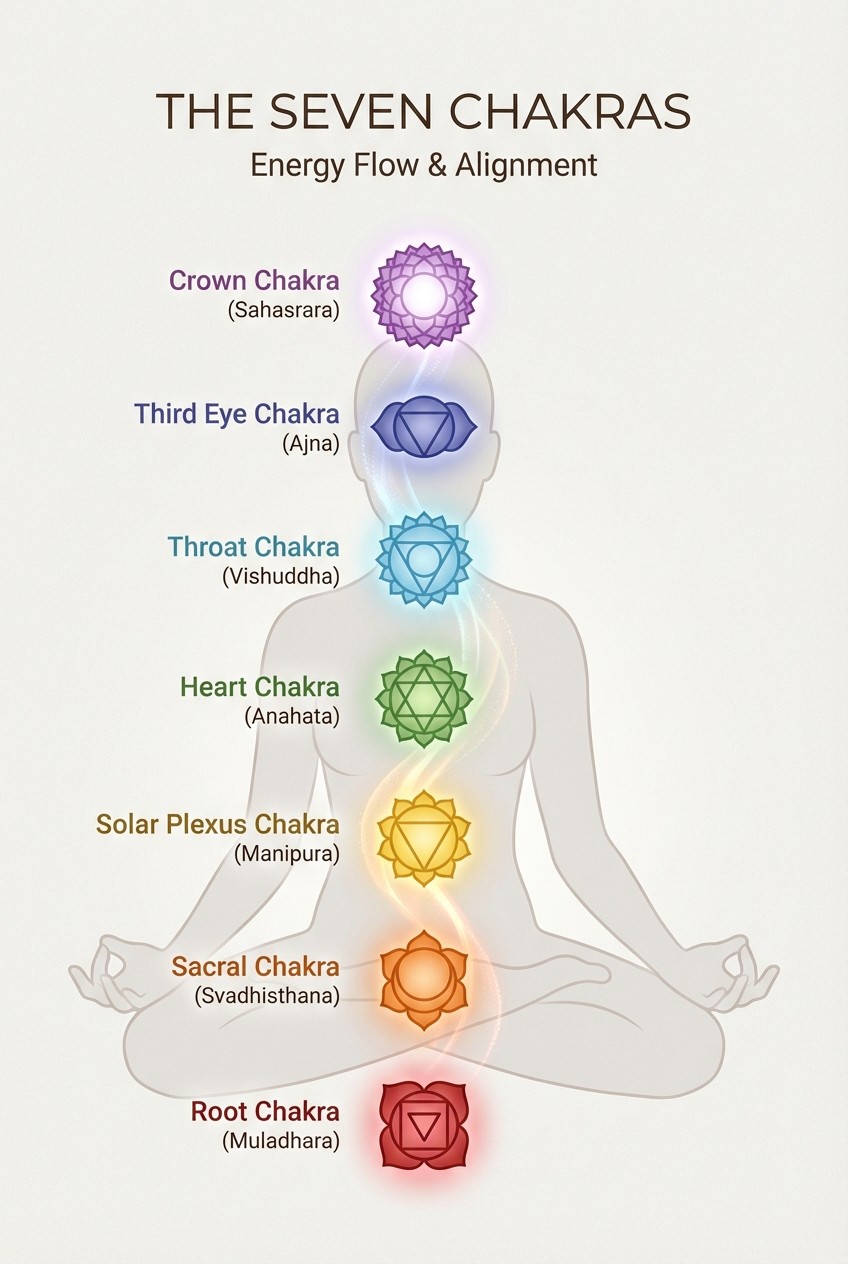
This guide explores each of the seven chakras individually and explains their unique function within Tantric philosophy. Whether you’re new to energy work or looking to deepen your practice, you’ll discover how these ancient teachings remain relevant for modern seekers.
What are the 7 chakras? A complete overview
The word “chakra” comes from Sanskrit and translates to “wheel” or “vortex.” In the subtle body (the energetic dimension that ancient yogis mapped alongside the physical body), chakras function as spinning centers where energy concentrates and transforms. Think of them as intersections where multiple energy pathways meet, similar to how highways converge at major junctions.
The concept of chakras first appears in the ancient Upanishads, texts dating back over 2,500 years. Later Tantric traditions, particularly those documented in texts like the Hatha Yoga Pradipika, Gheranda Samhita, and Shiva Samhita (approximately 500 years ago), developed detailed systems for working with these energy centers. Learn more about the history of Tantra and how these teachings have evolved.
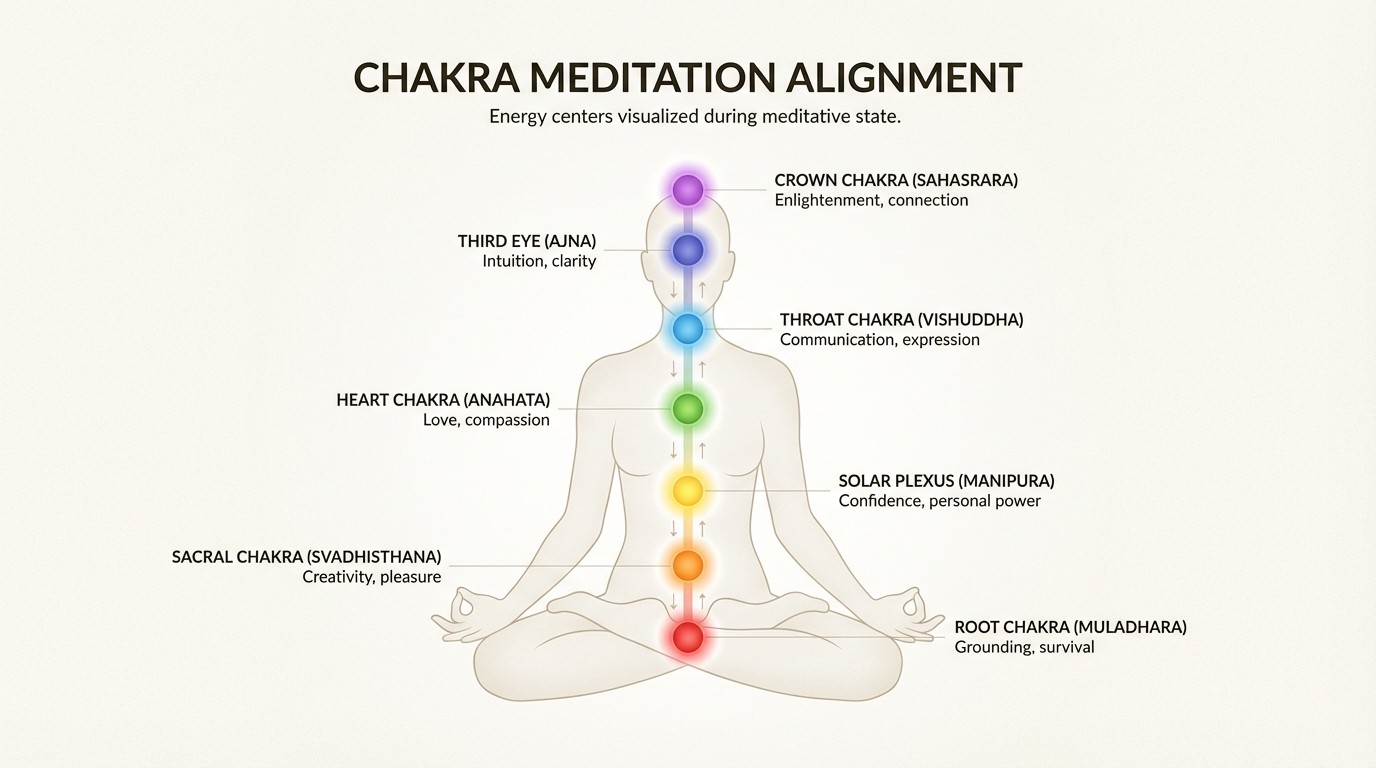
While the human body contains many minor energy centers, seven primary chakras form the core system. These align along the Sushumna, the central energy channel that runs parallel to the spine. Life force energy, called prana (or “Chi” in Taoism), flows through this channel and interacts with each chakra, influencing everything from our survival instincts to our capacity for spiritual connection.
Each chakra corresponds to specific physical glands, psychological patterns, and spiritual qualities. When energy flows freely through all seven centers, we experience health, vitality, and a sense of wholeness. Blockages or imbalances in specific chakras manifest as physical symptoms, emotional patterns, or spiritual disconnection in the corresponding areas of life.
The 7 chakras explained: From root to crown
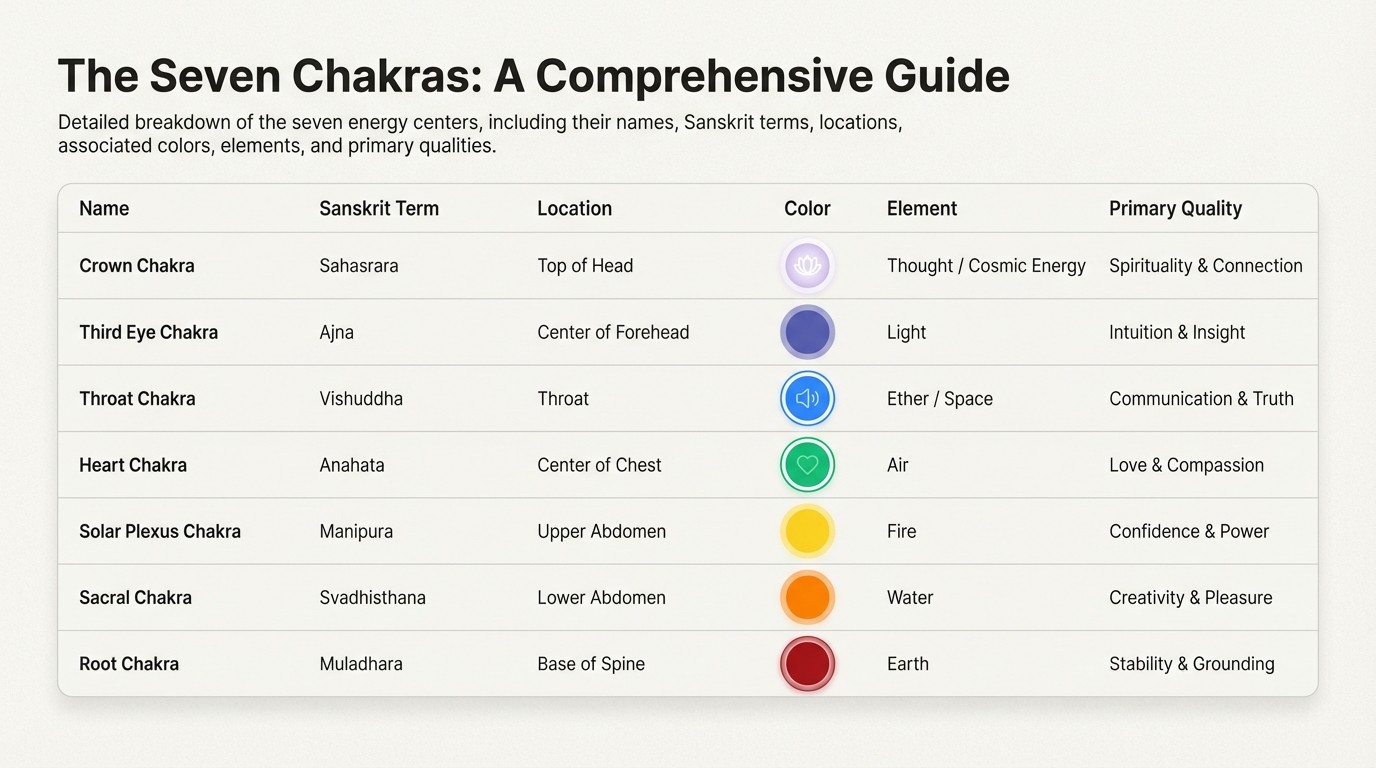
Understanding each chakra individually provides the foundation for working with them effectively. Let’s explore all seven, moving from the base of the spine upward to the crown of the head.
Muladhara (Root Chakra)
Located at the base of the spine, Muladhara serves as our energetic foundation. Its name combines “mula” (root) and “adhara” (support), reflecting its role as the base upon which all other chakras rest. The root chakra resonates with the color red and connects to the earth element.
This chakra governs our most basic survival needs: safety, security, shelter, food, and physical health. When Muladhara is balanced, we feel grounded, stable, and confident in our ability to meet life’s fundamental requirements. We trust that the earth supports us and that we belong here.
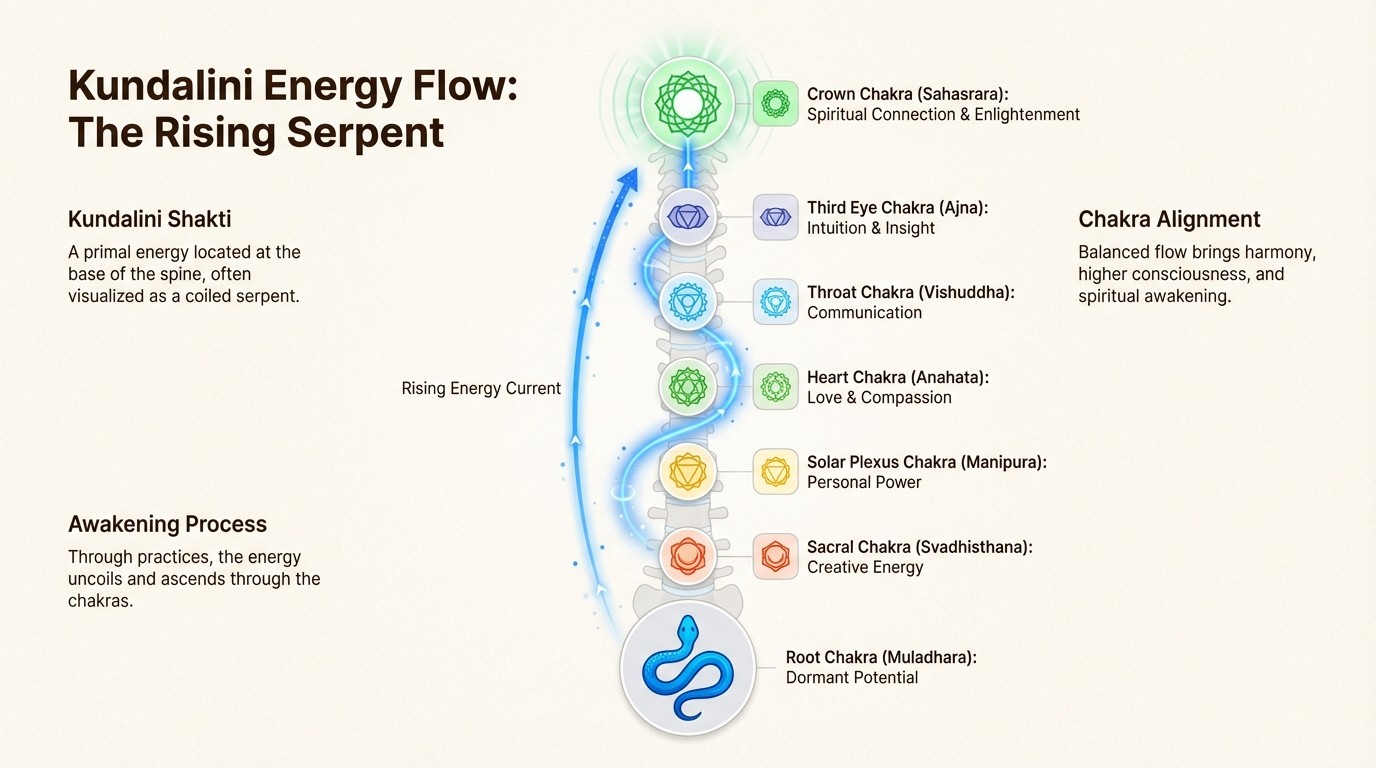
In Tantric practice, Muladhara holds special significance as the seat of Kundalini energy, the dormant spiritual power that Tantra seeks to awaken. All chakra work begins here because without a stable foundation, higher spiritual experiences lack integration. A blocked root chakra manifests as anxiety, financial insecurity, or physical problems in the legs, feet, or elimination systems.
Svadhisthana (Sacral Chakra)
Moving upward, we find Svadhisthana approximately two inches below the navel. This orange-colored chakra connects to the water element and governs creativity, sexuality, pleasure, and emotional flow. Its name means “one’s own abode,” suggesting the personal territory where our desires and creative impulses reside.
The sacral chakra influences our capacity to experience joy, connect with others intimately, and express ourselves creatively. It manages the ebb and flow of emotions, much like tides respond to lunar cycles. When balanced, Svadhisthana allows us to embrace pleasure without guilt, maintain healthy boundaries in relationships, and channel creative energy into art, work, or personal projects.
In Tantra, this chakra represents the life force itself, the energy that creates new life and fuels all creative endeavors. Blockages here often appear as sexual dysfunction, creative blocks, emotional repression, or addictive patterns. Physical symptoms may involve the reproductive organs, kidneys, or lower back.
Manipura (Solar Plexus/Navel Chakra)
Located at the navel region (traditional Tantric texts place it at the navel itself, not the solar plexus as some Western adaptations suggest), Manipura glows with yellow light and connects to the fire element. Its name means “city of jewels,” reflecting the precious qualities of personal power, confidence, and will that it contains.
This chakra governs our sense of identity, self-esteem, and personal power. It manages the digestive fire (Agni in Sanskrit) that transforms food into energy and experiences into wisdom. When Manipura is balanced, we feel confident, motivated, and capable of manifesting our intentions in the world.
Tantric practice pays particular attention to Manipura because it represents the transformation center where lower, instinctual energies can be refined and directed upward toward spiritual goals. A blocked third chakra manifests as low self-worth, difficulty making decisions, digestive issues, or the opposite extreme: controlling, domineering behavior.
Anahata (Heart Chakra)
At the center of the chest sits Anahata, the heart chakra, glowing green and connected to the air element. Its name refers to the “unstruck sound,” the subtle vibration of the universe that becomes audible to advanced practitioners. This chakra serves as the bridge between the lower three chakras (concerned with physical and emotional matters) and the upper three (concerned with spiritual realms).
Anahata governs love in all its forms: self-love, romantic love, compassion for others, and ultimately, universal love. When the heart chakra is open, we experience genuine connection, empathy, and the recognition that we are not separate from others but part of a larger whole.
In Tantra, the heart chakra holds particular importance as the integration point where earthly and divine love meet. Many Tantric practices specifically aim to open this center, recognizing that spiritual growth without heart-centeredness becomes dry and intellectual. Blockages here manifest as loneliness, jealousy, difficulty giving or receiving love, or respiratory and cardiac issues.
Vishuddha (Throat Chakra)
Located at the center of the throat, Vishuddha radiates blue light and connects to the ether or space element. Its name means “purification,” indicating its role in filtering and refining energy before it reaches the higher centers. This chakra governs communication, self-expression, and the ability to speak one’s truth.
When Vishuddha is balanced, we communicate clearly and authentically. We listen deeply to others and express ourselves with integrity. Our words carry power because they align with our inner truth. Creative expression through writing, singing, or speaking flows naturally.
Tantric traditions emphasize the throat chakra as the center where sound and vibration become creative forces. Mantras, sacred sounds repeated in meditation, work primarily through this center to transform consciousness. Blockages manifest as difficulty expressing oneself, fear of speaking up, throat or thyroid issues, or the opposite: excessive, inauthentic chatter.
Ajna (Third Eye Chakra)
Between the eyebrows sits Ajna, the third eye chakra, glowing indigo and connected to the light element. Its name means “command” or “perceive,” reflecting its function as the center of intuition, inner vision, and wisdom. This chakra transcends ordinary perception, allowing access to subtle dimensions of reality.
When Ajna is open, we experience clear intuition, strong imagination, and the ability to see beyond surface appearances to deeper truths. We become aware of the interconnectedness of all things and develop what traditions call “witness consciousness,” the ability to observe our thoughts and experiences without becoming entangled in them.
In Tantra, Ajna represents the command center where the practitioner gains mastery over the mind. Advanced practices focus on stabilizing awareness here, creating a foundation for the final ascent to the crown. Blockages manifest as confusion, lack of clarity, difficulty concentrating, or disconnection from intuition.
Sahasrara (Crown Chakra)
At the very top of the head rests Sahasrara, the crown chakra, visualized as violet or white light and connected to universal consciousness rather than a physical element. Its name means “thousand-petaled lotus,” describing the radiant, expansive quality of fully awakened spiritual consciousness.
This chakra represents our connection to the divine, however we understand that concept. When Sahasrara opens, the sense of separate self dissolves into recognition of oneness with all existence. This is the state of enlightenment that all spiritual traditions point toward, described variously as liberation, union, or awakening.
In Tantric practice, the crown chakra represents the culmination of the journey that begins at the root. As Kundalini energy rises through each center, it eventually reaches Sahasrara, triggering profound transformation. While full awakening of this chakra is rare, even partial opening brings increased peace, joy, and spiritual insight.
How Tantra views chakras differently
While many modern wellness approaches treat chakras as static energy centers to be “balanced” or “aligned,” Tantra offers a more dynamic and comprehensive understanding. These differences matter for anyone serious about energy work.
Spinning vortices of living energy
In Tantra, chakras are not fixed points but dynamic, rotating vortices of energy. They spin at different speeds depending on our physical health, emotional state, and spiritual development. A chakra might spin rapidly and smoothly when healthy, or sluggishly and irregularly when blocked. This understanding shifts our approach from static “fixing” to dynamic cultivation.
Storehouses of experience and memory
Perhaps the most significant Tantric insight is that chakras function as storehouses. Each center holds memories, traumas, patterns, and tendencies accumulated throughout our lives and, some traditions suggest, from previous incarnations. The root chakra might store early childhood experiences of safety or danger. The heart chakra holds our relationship history. The sacral chakra contains our sexual and creative imprinting.
This explains why intellectual understanding often fails to shift deep patterns. The issues aren’t just mental; they’re encoded in our energetic architecture. Tantric practices work directly with these stored patterns, using breath, movement, sound, and awareness to release blockages and awaken dormant potential. Explore how Tantra facilitates energy transformation in profound ways.
The Kundalini connection
Tantra uniquely emphasizes the relationship between chakras and Kundalini energy. Visualized as a coiled serpent resting at the base of the spine, Kundalini represents our latent spiritual potential. Through practice, this energy can be awakened and guided upward through each chakra, progressively expanding consciousness.
As Kundalini rises, it “pierces” each chakra, activating its full potential and clearing accumulated blockages. This is not merely metaphorical; practitioners report distinct physical and energetic sensations as energy moves through different centers. The process requires preparation, guidance, and respect for its power.
The three triangles
Tantra organizes the seven chakras into three functional groups. The lower triangle (root, sacral, and navel chakras) governs our physical existence, survival, sexuality, and personal power. The upper triangle (throat, third eye, and crown chakras) governs spiritual development, communication, intuition, and divine connection. The heart chakra sits between them, serving as the bridge that integrates earthly and spiritual concerns.
This structure explains why spiritual practice must include the body rather than transcending it. Working only with the upper chakras creates imbalance, disconnection, and what some traditions call “spiritual bypassing.” True integration requires honoring all levels of our being.
The subtle body perspective
Finally, Tantra locates chakras in the subtle body, not the physical anatomy. While they correspond roughly to locations along the spine and in the head, they exist in the energetic dimension that interpenetrates the physical. This explains why medical science has not located chakras through dissection, while millions of practitioners report direct experience of them through meditation and energy work.
The nine chakra system
It’s worth noting that some Tantric texts, particularly the Shiva Samhita, describe a nine-chakra system that includes two additional centers above the crown: the Taluka Chakra (associated with the nectar of immortality) and the Brahma Chakra (representing absolute unity with supreme consciousness). While the seven-chakra system is more commonly taught, awareness of this expanded map honors the full depth of Tantric teachings.
The role of chakras in Tantric practice
Understanding chakras intellectually provides a framework, but Tantra is fundamentally an experiential path. The teachings come alive through practice. Here’s how chakras function in different Tantric approaches.
White Tantra: Individual spiritual development
White Tantra encompasses solitary practices aimed at spiritual awakening. Working with chakras in this context involves meditation, breathwork (pranayama), visualization, and yoga postures designed to activate and balance each center.
Practitioners might focus attention on a specific chakra during meditation, visualizing its color, element, and qualities while breathing into that area of the body. Mantras associated with each center are repeated to stimulate their energy. Over time, this develops sensitivity to subtle energy and the ability to consciously direct awareness through the chakra system.
The goal of White Tantra is individual transformation: clearing blockages, developing spiritual capacities, and preparing the energy body for higher practices. It’s the foundation upon which other forms of Tantra build.
Red Tantra: Sacred relationship and energy cultivation
Red Tantra works with sexual energy as a path to spiritual awakening. Here, chakras play a crucial role as the channels through which sexual energy is transformed. Rather than releasing energy outward through orgasm, Red Tantra teaches practitioners to draw energy upward through the chakras, using it to fuel spiritual development.
This practice requires the foundation established through White Tantra. Without the ability to sense and direct energy, the powerful forces involved in Red Tantra can become overwhelming or misdirected. The heart chakra receives particular attention in Red Tantra, as it represents the integration of sexual and spiritual love.
Learn about sacred touch and healing practices that work with these energy dynamics.
Energy cultivation and healing
All Tantric practices ultimately aim to cultivate and refine energy. Chakras serve as the map for this work. Practitioners learn to identify where energy is blocked, excessive, or deficient, then apply appropriate techniques to restore balance.
Physical symptoms often point to chakra imbalances. Chronic throat problems might indicate Vishuddha issues. Digestive complaints could signal Manipura blockage. Sexual difficulties often relate to Svadhisthana. By addressing the energetic root, Tantric healing works at deeper levels than symptomatic treatment.
Shadow work and integration
Some Tantric approaches, sometimes called Black or Dark Tantra, work specifically with the unconscious patterns stored in chakras. This “shadow work” brings repressed material into conscious awareness for integration. Rather than transcending our humanity, this approach seeks to fully embody it, including the aspects we might prefer to deny.
Each chakra has its “shadow” qualities: fear in the root, guilt in the sacral, shame in the solar plexus, grief in the heart, dishonesty in the throat, illusion in the third eye, and spiritual ego in the crown. Working with these shadows is essential for genuine awakening.
Signs of balanced versus blocked chakras
Developing awareness of your own chakra state is an ongoing practice. Some indicators include:
Balanced chakras: Physical health in corresponding body areas, emotional resilience, clear expression of the chakra’s qualities (security, creativity, confidence, love, communication, intuition, spiritual connection), and a sense of energy flowing freely through the body.
Blocked chakras: Chronic physical issues in corresponding areas, repetitive emotional patterns, difficulty expressing the chakra’s qualities, feeling stuck or depleted, and a sense of disconnection from parts of yourself or life.
Working with your chakras: Practical guidance
If you’re drawn to explore chakra work, here are some foundational principles to guide your practice.
Awareness comes first
Before attempting to manipulate energy, develop the capacity to sense it. Simple body awareness practices, like systematically bringing attention to different areas during meditation, build the sensitivity needed to perceive chakra energy. This takes time and consistent practice. Be patient with yourself.
Start with the root
Tantric wisdom emphasizes working from the ground up. A stable foundation in the root chakra supports everything above it. Practices that ground you, connect you to your body, and establish basic safety create the container for deeper work. Attempting to force open higher chakras without this foundation can lead to instability, dissociation, or spiritual bypassing.
Simple practices for daily life
You don’t need elaborate rituals to work with chakras. Simple practices integrated into daily life often prove more effective than occasional intensive sessions:
- Meditation: Spend 10-20 minutes daily focusing attention on each chakra, visualizing its color and breathing into that area
- Mantras: Chant the seed syllable for each chakra (LAM for root, VAM for sacral, RAM for solar plexus, YAM for heart, HAM for throat, OM for third eye, silent awareness for crown)
- Yoga: Practice poses that stimulate specific chakras (grounding poses for root, hip openers for sacral, core work for solar plexus, backbends for heart, neck stretches for throat, child’s pose with forehead pressure for third eye, inversions for crown)
- Lifestyle: Notice how different foods, activities, and relationships affect your energy in different chakra areas
Working with experienced guidance
While personal practice is essential, certain aspects of chakra work benefit from experienced guidance. A qualified teacher can help you navigate intense experiences, correct imbalances you might not perceive yourself, and provide practices tailored to your specific needs.
When seeking instruction, look for someone with legitimate training in a recognized tradition. The field of Tantric instruction, as with any area involving intimate work, attracts its share of charlatans. Trust your intuition, ask about lineage and training, and be wary of anyone who pressures you or promises quick results.
Safety considerations
Energy work is powerful and should be approached with respect. Some important guidelines:
- Don’t force anything. If a practice creates discomfort beyond mild challenge, back off
- Ground regularly, especially after intensive practice
- Maintain physical health through proper nutrition, sleep, and exercise
- Be cautious about intensive retreats or practices without adequate preparation
- Seek support if you experience destabilizing symptoms
Remember that chakra work is part of a complete spiritual path, not an end in itself. Integration matters more than intensity. Small, consistent practices over time create lasting transformation.
Begin your chakra journey with conscious Tantric practice
The seven chakras offer more than an interesting metaphysical system. They provide a practical map for understanding ourselves and a proven technology for transformation. From the grounded stability of the root to the expansive awareness of the crown, each chakra represents both a stage of development and a dimension of human experience to be honored.
In Tantra, this journey isn’t about escaping into higher realms while ignoring our earthly existence. It’s about fully inhabiting every level of our being, integrating body and spirit, shadow and light, human and divine. The chakras show us that these aren’t opposites to be resolved but complementary aspects of a complete life.
At Waves Tantra, we combine ancient teachings with modern understanding to support your unique journey. Whether you’re drawn to individual sessions exploring your energy body, couples work integrating relationship and spiritual practice, or remote coaching that fits your schedule, we’re here to guide you. View our session offerings to find the approach that resonates with you.
The chakras have been maps for spiritual travelers for thousands of years. Their wisdom remains as relevant today as ever, offering pathways to healing, wholeness, and awakening. Wherever you are on your journey, the next step is simply to begin.
Explore our rates and book a session to start working with your chakra system today. For those who prefer learning at their own pace, our Tantra coaching offers personalized guidance tailored to your specific goals and circumstances.
Frequently Asked Questions
What are the 7 chakras and what role do the chakras play in Tantra?
The seven chakras are energy centers located along the spine from base to crown: root (Muladhara), sacral (Svadhisthana), solar plexus (Manipura), heart (Anahata), throat (Vishuddha), third eye (Ajna), and crown (Sahasrara). In Tantra, they serve as a map for spiritual development, storehouses of experience and memory, and stations through which Kundalini energy rises to awaken consciousness.
How do I know if my chakras are blocked?
Signs of blocked chakras include chronic physical issues in corresponding body areas (digestive problems for solar plexus, throat issues for throat chakra), repetitive emotional patterns (fear for root, jealousy for heart), feeling stuck or depleted, and difficulty expressing the qualities associated with specific chakras.
Can I work with my chakras without a teacher?
Basic awareness practices and simple techniques like meditation, breathwork, and yoga can be practiced independently. However, intensive energy work or Kundalini activation benefits from experienced guidance. A qualified teacher can help navigate intense experiences and provide practices tailored to your needs.
What’s the difference between the seven-chakra system and the nine-chakra system?
The seven-chakra system is most commonly taught in modern yoga and wellness contexts. Some Tantric texts, particularly the Shiva Samhita, describe nine chakras that include Taluka Chakra (associated with divine nectar) and Brahma Chakra (representing absolute unity) above the crown. Both systems are valid within different Tantric lineages.
How long does it take to balance the chakras?
There’s no fixed timeline for chakra work. Some shifts happen quickly, while deep transformation unfolds over years of consistent practice. The journey itself is the point, not reaching a destination. Small, regular practices typically create more lasting change than intensive short-term efforts.
Is Tantra only about sexuality and the chakras?
No. While Tantra includes practices that work with sexual energy (Red Tantra), it encompasses much more. White Tantra focuses on individual spiritual development through meditation and breathwork. The chakra system applies to all aspects of life, from physical health to spiritual awakening, not just sexuality.
What are the 7 chakras and what role do the chakras play in Tantra compared to other spiritual traditions?
While many traditions recognize energy centers, Tantra offers unique perspectives: chakras as dynamic spinning vortices rather than static points, storehouses of experience and memory, and stations along the path of rising Kundalini energy. Tantra also emphasizes integration of all chakras rather than transcending lower centers.