by Numan Shaikh | Feb 17, 2026 | Tantra
Chakras have become mainstream wellness vocabulary. You’ll hear them mentioned in yoga studios, meditation apps, and crystal shops. But their role in Tantra, the ancient spiritual tradition from which they originate, remains widely misunderstood. Many people associate Tantra solely with sexuality, missing the profound system for spiritual transformation that works directly with these energy centers.
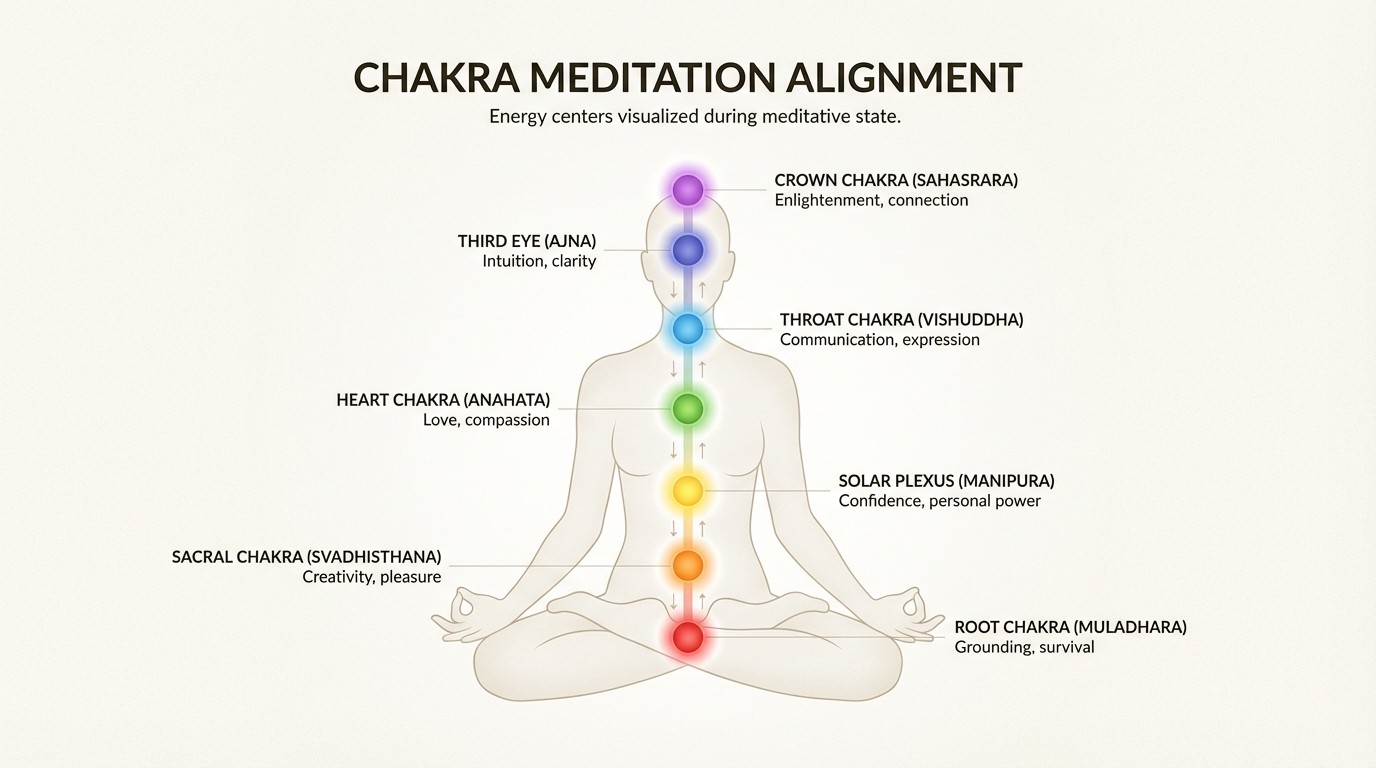
In Tantra, the seven chakras are not just colorful symbols on yoga pants. They represent a complete map of human consciousness, running from the base of the spine to the crown of the head. Each chakra governs specific aspects of our physical, emotional, and spiritual lives. Understanding them opens doors to deeper self-awareness, healing, and ultimately, spiritual awakening.
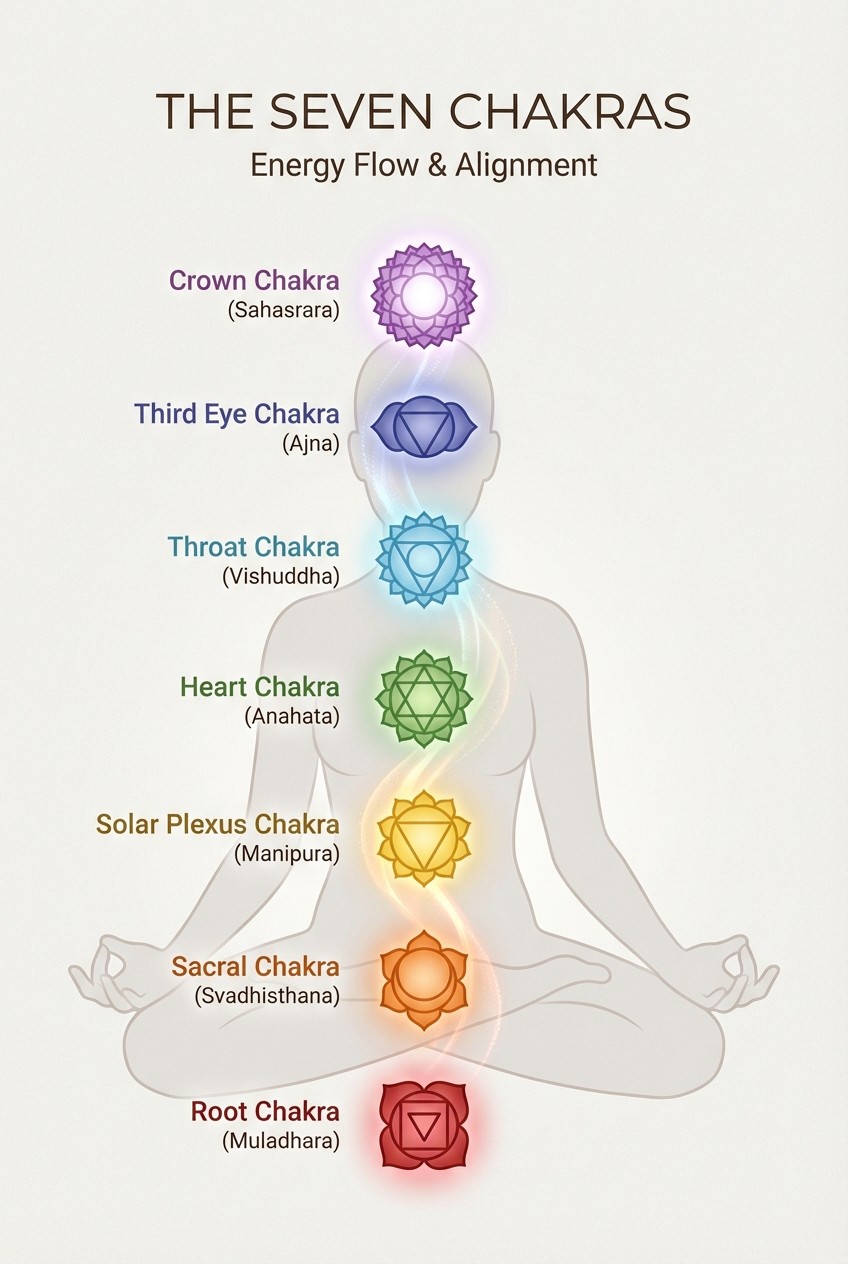
This guide explores each of the seven chakras individually and explains their unique function within Tantric philosophy. Whether you’re new to energy work or looking to deepen your practice, you’ll discover how these ancient teachings remain relevant for modern seekers.
What are the 7 chakras? A complete overview
The word “chakra” comes from Sanskrit and translates to “wheel” or “vortex.” In the subtle body (the energetic dimension that ancient yogis mapped alongside the physical body), chakras function as spinning centers where energy concentrates and transforms. Think of them as intersections where multiple energy pathways meet, similar to how highways converge at major junctions.
The concept of chakras first appears in the ancient Upanishads, texts dating back over 2,500 years. Later Tantric traditions, particularly those documented in texts like the Hatha Yoga Pradipika, Gheranda Samhita, and Shiva Samhita (approximately 500 years ago), developed detailed systems for working with these energy centers. Learn more about the history of Tantra and how these teachings have evolved.
While the human body contains many minor energy centers, seven primary chakras form the core system. These align along the Sushumna, the central energy channel that runs parallel to the spine. Life force energy, called prana (or “Chi” in Taoism), flows through this channel and interacts with each chakra, influencing everything from our survival instincts to our capacity for spiritual connection.
Each chakra corresponds to specific physical glands, psychological patterns, and spiritual qualities. When energy flows freely through all seven centers, we experience health, vitality, and a sense of wholeness. Blockages or imbalances in specific chakras manifest as physical symptoms, emotional patterns, or spiritual disconnection in the corresponding areas of life.
The 7 chakras explained: From root to crown
Understanding each chakra individually provides the foundation for working with them effectively. Let’s explore all seven, moving from the base of the spine upward to the crown of the head.
Muladhara (Root Chakra)
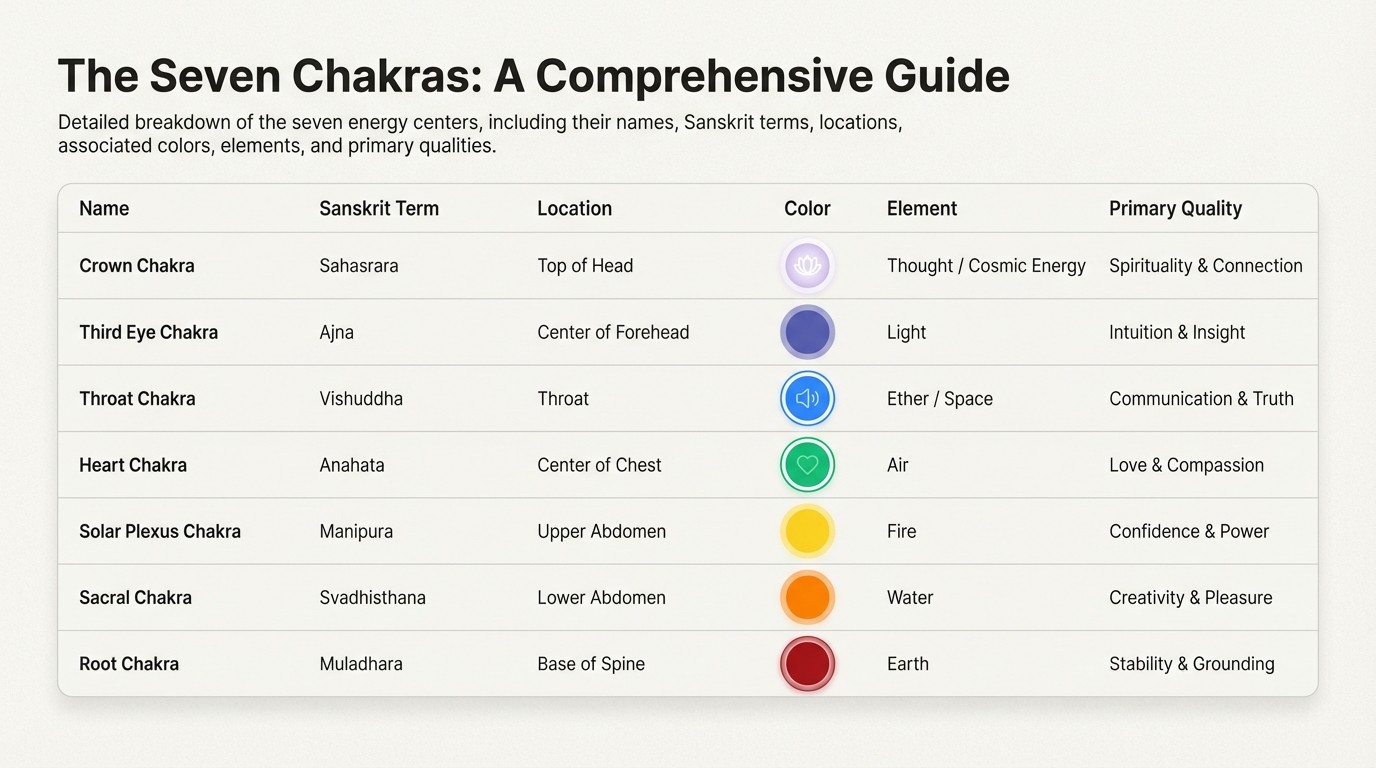
Located at the base of the spine, Muladhara serves as our energetic foundation. Its name combines “mula” (root) and “adhara” (support), reflecting its role as the base upon which all other chakras rest. The root chakra resonates with the color red and connects to the earth element.
This chakra governs our most basic survival needs: safety, security, shelter, food, and physical health. When Muladhara is balanced, we feel grounded, stable, and confident in our ability to meet life’s fundamental requirements. We trust that the earth supports us and that we belong here.
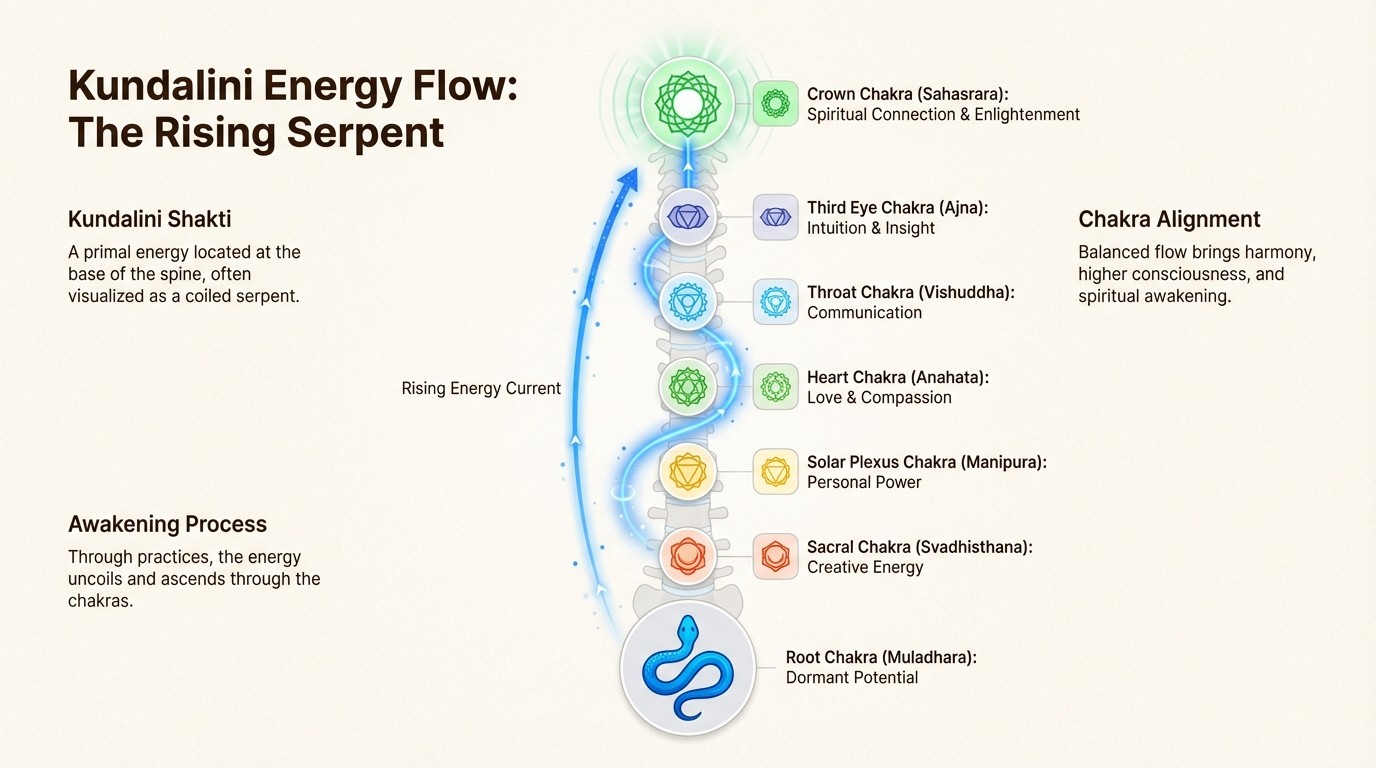
In Tantric practice, Muladhara holds special significance as the seat of Kundalini energy, the dormant spiritual power that Tantra seeks to awaken. All chakra work begins here because without a stable foundation, higher spiritual experiences lack integration. A blocked root chakra manifests as anxiety, financial insecurity, or physical problems in the legs, feet, or elimination systems.
Svadhisthana (Sacral Chakra)
Moving upward, we find Svadhisthana approximately two inches below the navel. This orange-colored chakra connects to the water element and governs creativity, sexuality, pleasure, and emotional flow. Its name means “one’s own abode,” suggesting the personal territory where our desires and creative impulses reside.
The sacral chakra influences our capacity to experience joy, connect with others intimately, and express ourselves creatively. It manages the ebb and flow of emotions, much like tides respond to lunar cycles. When balanced, Svadhisthana allows us to embrace pleasure without guilt, maintain healthy boundaries in relationships, and channel creative energy into art, work, or personal projects.
In Tantra, this chakra represents the life force itself, the energy that creates new life and fuels all creative endeavors. Blockages here often appear as sexual dysfunction, creative blocks, emotional repression, or addictive patterns. Physical symptoms may involve the reproductive organs, kidneys, or lower back.
Manipura (Solar Plexus/Navel Chakra)
Located at the navel region (traditional Tantric texts place it at the navel itself, not the solar plexus as some Western adaptations suggest), Manipura glows with yellow light and connects to the fire element. Its name means “city of jewels,” reflecting the precious qualities of personal power, confidence, and will that it contains.
This chakra governs our sense of identity, self-esteem, and personal power. It manages the digestive fire (Agni in Sanskrit) that transforms food into energy and experiences into wisdom. When Manipura is balanced, we feel confident, motivated, and capable of manifesting our intentions in the world.
Tantric practice pays particular attention to Manipura because it represents the transformation center where lower, instinctual energies can be refined and directed upward toward spiritual goals. A blocked third chakra manifests as low self-worth, difficulty making decisions, digestive issues, or the opposite extreme: controlling, domineering behavior.
Anahata (Heart Chakra)
At the center of the chest sits Anahata, the heart chakra, glowing green and connected to the air element. Its name refers to the “unstruck sound,” the subtle vibration of the universe that becomes audible to advanced practitioners. This chakra serves as the bridge between the lower three chakras (concerned with physical and emotional matters) and the upper three (concerned with spiritual realms).
Anahata governs love in all its forms: self-love, romantic love, compassion for others, and ultimately, universal love. When the heart chakra is open, we experience genuine connection, empathy, and the recognition that we are not separate from others but part of a larger whole.
In Tantra, the heart chakra holds particular importance as the integration point where earthly and divine love meet. Many Tantric practices specifically aim to open this center, recognizing that spiritual growth without heart-centeredness becomes dry and intellectual. Blockages here manifest as loneliness, jealousy, difficulty giving or receiving love, or respiratory and cardiac issues.
Vishuddha (Throat Chakra)
Located at the center of the throat, Vishuddha radiates blue light and connects to the ether or space element. Its name means “purification,” indicating its role in filtering and refining energy before it reaches the higher centers. This chakra governs communication, self-expression, and the ability to speak one’s truth.
When Vishuddha is balanced, we communicate clearly and authentically. We listen deeply to others and express ourselves with integrity. Our words carry power because they align with our inner truth. Creative expression through writing, singing, or speaking flows naturally.
Tantric traditions emphasize the throat chakra as the center where sound and vibration become creative forces. Mantras, sacred sounds repeated in meditation, work primarily through this center to transform consciousness. Blockages manifest as difficulty expressing oneself, fear of speaking up, throat or thyroid issues, or the opposite: excessive, inauthentic chatter.
Ajna (Third Eye Chakra)
Between the eyebrows sits Ajna, the third eye chakra, glowing indigo and connected to the light element. Its name means “command” or “perceive,” reflecting its function as the center of intuition, inner vision, and wisdom. This chakra transcends ordinary perception, allowing access to subtle dimensions of reality.
When Ajna is open, we experience clear intuition, strong imagination, and the ability to see beyond surface appearances to deeper truths. We become aware of the interconnectedness of all things and develop what traditions call “witness consciousness,” the ability to observe our thoughts and experiences without becoming entangled in them.
In Tantra, Ajna represents the command center where the practitioner gains mastery over the mind. Advanced practices focus on stabilizing awareness here, creating a foundation for the final ascent to the crown. Blockages manifest as confusion, lack of clarity, difficulty concentrating, or disconnection from intuition.
Sahasrara (Crown Chakra)
At the very top of the head rests Sahasrara, the crown chakra, visualized as violet or white light and connected to universal consciousness rather than a physical element. Its name means “thousand-petaled lotus,” describing the radiant, expansive quality of fully awakened spiritual consciousness.
This chakra represents our connection to the divine, however we understand that concept. When Sahasrara opens, the sense of separate self dissolves into recognition of oneness with all existence. This is the state of enlightenment that all spiritual traditions point toward, described variously as liberation, union, or awakening.
In Tantric practice, the crown chakra represents the culmination of the journey that begins at the root. As Kundalini energy rises through each center, it eventually reaches Sahasrara, triggering profound transformation. While full awakening of this chakra is rare, even partial opening brings increased peace, joy, and spiritual insight.
How Tantra views chakras differently
While many modern wellness approaches treat chakras as static energy centers to be “balanced” or “aligned,” Tantra offers a more dynamic and comprehensive understanding. These differences matter for anyone serious about energy work.
Spinning vortices of living energy
In Tantra, chakras are not fixed points but dynamic, rotating vortices of energy. They spin at different speeds depending on our physical health, emotional state, and spiritual development. A chakra might spin rapidly and smoothly when healthy, or sluggishly and irregularly when blocked. This understanding shifts our approach from static “fixing” to dynamic cultivation.
Storehouses of experience and memory
Perhaps the most significant Tantric insight is that chakras function as storehouses. Each center holds memories, traumas, patterns, and tendencies accumulated throughout our lives and, some traditions suggest, from previous incarnations. The root chakra might store early childhood experiences of safety or danger. The heart chakra holds our relationship history. The sacral chakra contains our sexual and creative imprinting.
This explains why intellectual understanding often fails to shift deep patterns. The issues aren’t just mental; they’re encoded in our energetic architecture. Tantric practices work directly with these stored patterns, using breath, movement, sound, and awareness to release blockages and awaken dormant potential. Explore how Tantra facilitates energy transformation in profound ways.
The Kundalini connection
Tantra uniquely emphasizes the relationship between chakras and Kundalini energy. Visualized as a coiled serpent resting at the base of the spine, Kundalini represents our latent spiritual potential. Through practice, this energy can be awakened and guided upward through each chakra, progressively expanding consciousness.
As Kundalini rises, it “pierces” each chakra, activating its full potential and clearing accumulated blockages. This is not merely metaphorical; practitioners report distinct physical and energetic sensations as energy moves through different centers. The process requires preparation, guidance, and respect for its power.
The three triangles
Tantra organizes the seven chakras into three functional groups. The lower triangle (root, sacral, and navel chakras) governs our physical existence, survival, sexuality, and personal power. The upper triangle (throat, third eye, and crown chakras) governs spiritual development, communication, intuition, and divine connection. The heart chakra sits between them, serving as the bridge that integrates earthly and spiritual concerns.
This structure explains why spiritual practice must include the body rather than transcending it. Working only with the upper chakras creates imbalance, disconnection, and what some traditions call “spiritual bypassing.” True integration requires honoring all levels of our being.
The subtle body perspective
Finally, Tantra locates chakras in the subtle body, not the physical anatomy. While they correspond roughly to locations along the spine and in the head, they exist in the energetic dimension that interpenetrates the physical. This explains why medical science has not located chakras through dissection, while millions of practitioners report direct experience of them through meditation and energy work.
The nine chakra system
It’s worth noting that some Tantric texts, particularly the Shiva Samhita, describe a nine-chakra system that includes two additional centers above the crown: the Taluka Chakra (associated with the nectar of immortality) and the Brahma Chakra (representing absolute unity with supreme consciousness). While the seven-chakra system is more commonly taught, awareness of this expanded map honors the full depth of Tantric teachings.
The role of chakras in Tantric practice
Understanding chakras intellectually provides a framework, but Tantra is fundamentally an experiential path. The teachings come alive through practice. Here’s how chakras function in different Tantric approaches.
White Tantra: Individual spiritual development
White Tantra encompasses solitary practices aimed at spiritual awakening. Working with chakras in this context involves meditation, breathwork (pranayama), visualization, and yoga postures designed to activate and balance each center.
Practitioners might focus attention on a specific chakra during meditation, visualizing its color, element, and qualities while breathing into that area of the body. Mantras associated with each center are repeated to stimulate their energy. Over time, this develops sensitivity to subtle energy and the ability to consciously direct awareness through the chakra system.
The goal of White Tantra is individual transformation: clearing blockages, developing spiritual capacities, and preparing the energy body for higher practices. It’s the foundation upon which other forms of Tantra build.
Red Tantra: Sacred relationship and energy cultivation
Red Tantra works with sexual energy as a path to spiritual awakening. Here, chakras play a crucial role as the channels through which sexual energy is transformed. Rather than releasing energy outward through orgasm, Red Tantra teaches practitioners to draw energy upward through the chakras, using it to fuel spiritual development.
This practice requires the foundation established through White Tantra. Without the ability to sense and direct energy, the powerful forces involved in Red Tantra can become overwhelming or misdirected. The heart chakra receives particular attention in Red Tantra, as it represents the integration of sexual and spiritual love.
Learn about sacred touch and healing practices that work with these energy dynamics.
Energy cultivation and healing
All Tantric practices ultimately aim to cultivate and refine energy. Chakras serve as the map for this work. Practitioners learn to identify where energy is blocked, excessive, or deficient, then apply appropriate techniques to restore balance.
Physical symptoms often point to chakra imbalances. Chronic throat problems might indicate Vishuddha issues. Digestive complaints could signal Manipura blockage. Sexual difficulties often relate to Svadhisthana. By addressing the energetic root, Tantric healing works at deeper levels than symptomatic treatment.
Shadow work and integration
Some Tantric approaches, sometimes called Black or Dark Tantra, work specifically with the unconscious patterns stored in chakras. This “shadow work” brings repressed material into conscious awareness for integration. Rather than transcending our humanity, this approach seeks to fully embody it, including the aspects we might prefer to deny.
Each chakra has its “shadow” qualities: fear in the root, guilt in the sacral, shame in the solar plexus, grief in the heart, dishonesty in the throat, illusion in the third eye, and spiritual ego in the crown. Working with these shadows is essential for genuine awakening.
Signs of balanced versus blocked chakras
Developing awareness of your own chakra state is an ongoing practice. Some indicators include:
Balanced chakras: Physical health in corresponding body areas, emotional resilience, clear expression of the chakra’s qualities (security, creativity, confidence, love, communication, intuition, spiritual connection), and a sense of energy flowing freely through the body.
Blocked chakras: Chronic physical issues in corresponding areas, repetitive emotional patterns, difficulty expressing the chakra’s qualities, feeling stuck or depleted, and a sense of disconnection from parts of yourself or life.
Working with your chakras: Practical guidance
If you’re drawn to explore chakra work, here are some foundational principles to guide your practice.
Awareness comes first
Before attempting to manipulate energy, develop the capacity to sense it. Simple body awareness practices, like systematically bringing attention to different areas during meditation, build the sensitivity needed to perceive chakra energy. This takes time and consistent practice. Be patient with yourself.
Start with the root
Tantric wisdom emphasizes working from the ground up. A stable foundation in the root chakra supports everything above it. Practices that ground you, connect you to your body, and establish basic safety create the container for deeper work. Attempting to force open higher chakras without this foundation can lead to instability, dissociation, or spiritual bypassing.
Simple practices for daily life
You don’t need elaborate rituals to work with chakras. Simple practices integrated into daily life often prove more effective than occasional intensive sessions:
- Meditation: Spend 10-20 minutes daily focusing attention on each chakra, visualizing its color and breathing into that area
- Mantras: Chant the seed syllable for each chakra (LAM for root, VAM for sacral, RAM for solar plexus, YAM for heart, HAM for throat, OM for third eye, silent awareness for crown)
- Yoga: Practice poses that stimulate specific chakras (grounding poses for root, hip openers for sacral, core work for solar plexus, backbends for heart, neck stretches for throat, child’s pose with forehead pressure for third eye, inversions for crown)
- Lifestyle: Notice how different foods, activities, and relationships affect your energy in different chakra areas
Working with experienced guidance
While personal practice is essential, certain aspects of chakra work benefit from experienced guidance. A qualified teacher can help you navigate intense experiences, correct imbalances you might not perceive yourself, and provide practices tailored to your specific needs.
When seeking instruction, look for someone with legitimate training in a recognized tradition. The field of Tantric instruction, as with any area involving intimate work, attracts its share of charlatans. Trust your intuition, ask about lineage and training, and be wary of anyone who pressures you or promises quick results.
Safety considerations
Energy work is powerful and should be approached with respect. Some important guidelines:
- Don’t force anything. If a practice creates discomfort beyond mild challenge, back off
- Ground regularly, especially after intensive practice
- Maintain physical health through proper nutrition, sleep, and exercise
- Be cautious about intensive retreats or practices without adequate preparation
- Seek support if you experience destabilizing symptoms
Remember that chakra work is part of a complete spiritual path, not an end in itself. Integration matters more than intensity. Small, consistent practices over time create lasting transformation.
Begin your chakra journey with conscious Tantric practice
The seven chakras offer more than an interesting metaphysical system. They provide a practical map for understanding ourselves and a proven technology for transformation. From the grounded stability of the root to the expansive awareness of the crown, each chakra represents both a stage of development and a dimension of human experience to be honored.
In Tantra, this journey isn’t about escaping into higher realms while ignoring our earthly existence. It’s about fully inhabiting every level of our being, integrating body and spirit, shadow and light, human and divine. The chakras show us that these aren’t opposites to be resolved but complementary aspects of a complete life.
At Waves Tantra, we combine ancient teachings with modern understanding to support your unique journey. Whether you’re drawn to individual sessions exploring your energy body, couples work integrating relationship and spiritual practice, or remote coaching that fits your schedule, we’re here to guide you. View our session offerings to find the approach that resonates with you.
The chakras have been maps for spiritual travelers for thousands of years. Their wisdom remains as relevant today as ever, offering pathways to healing, wholeness, and awakening. Wherever you are on your journey, the next step is simply to begin.
Explore our rates and book a session to start working with your chakra system today. For those who prefer learning at their own pace, our Tantra coaching offers personalized guidance tailored to your specific goals and circumstances.
Frequently Asked Questions
What are the 7 chakras and what role do the chakras play in Tantra?
The seven chakras are energy centers located along the spine from base to crown: root (Muladhara), sacral (Svadhisthana), solar plexus (Manipura), heart (Anahata), throat (Vishuddha), third eye (Ajna), and crown (Sahasrara). In Tantra, they serve as a map for spiritual development, storehouses of experience and memory, and stations through which Kundalini energy rises to awaken consciousness.
How do I know if my chakras are blocked?
Signs of blocked chakras include chronic physical issues in corresponding body areas (digestive problems for solar plexus, throat issues for throat chakra), repetitive emotional patterns (fear for root, jealousy for heart), feeling stuck or depleted, and difficulty expressing the qualities associated with specific chakras.
Can I work with my chakras without a teacher?
Basic awareness practices and simple techniques like meditation, breathwork, and yoga can be practiced independently. However, intensive energy work or Kundalini activation benefits from experienced guidance. A qualified teacher can help navigate intense experiences and provide practices tailored to your needs.
What’s the difference between the seven-chakra system and the nine-chakra system?
The seven-chakra system is most commonly taught in modern yoga and wellness contexts. Some Tantric texts, particularly the Shiva Samhita, describe nine chakras that include Taluka Chakra (associated with divine nectar) and Brahma Chakra (representing absolute unity) above the crown. Both systems are valid within different Tantric lineages.
How long does it take to balance the chakras?
There’s no fixed timeline for chakra work. Some shifts happen quickly, while deep transformation unfolds over years of consistent practice. The journey itself is the point, not reaching a destination. Small, regular practices typically create more lasting change than intensive short-term efforts.
Is Tantra only about sexuality and the chakras?
No. While Tantra includes practices that work with sexual energy (Red Tantra), it encompasses much more. White Tantra focuses on individual spiritual development through meditation and breathwork. The chakra system applies to all aspects of life, from physical health to spiritual awakening, not just sexuality.
What are the 7 chakras and what role do the chakras play in Tantra compared to other spiritual traditions?
While many traditions recognize energy centers, Tantra offers unique perspectives: chakras as dynamic spinning vortices rather than static points, storehouses of experience and memory, and stations along the path of rising Kundalini energy. Tantra also emphasizes integration of all chakras rather than transcending lower centers.

by Numan Shaikh | Feb 9, 2026 | Tantra
You’ve probably heard whispers about tantra Massage. Maybe a friend mentioned it in hushed tones, or you stumbled across it while researching alternative healing modalities. The word “tantra” carries weight—it evokes images of ancient temples, mystical practices, and yes, often sexual connotations that may leave you curious but also confused. Here’s the truth: Tantra Massage is one of the most misunderstood wellness practices today. It’s been sensationalized, stigmatized, and sometimes exploited. But beneath the misconceptions lies a legitimate healing modality that has helped thousands of people reconnect with their bodies, release trauma, and experience profound emotional and spiritual transformation. This guide will give you the straight answers you’re looking for. We’ll clear up the biggest myths about Tantra Massage, explain what actually happens during a session, explore the benefits (physical, emotional, and spiritual), and help you decide whether this practice aligns with your needs and comfort level. We’ll also cover how to find a safe, qualified practitioner—because not everyone advertising “Tantra Massage” has your wellbeing in mind. Whether you’re simply curious, actively seeking healing, or wondering if this modality could address specific concerns, you’ll leave this article with clarity and confidence to make an informed decision. 
Clearing up the biggest misconceptions about Tantra Massage
Before we explore what Tantra Massage is, we need to address the elephant in the room. The practice carries significant stigma, largely due to widespread misconceptions. Let’s clear them up with honesty and compassion.
Misconception 1: “It’s just a fancy term for erotic Conscious touch”
This is perhaps the most common misunderstanding. While both erotic Conscious touch and Tantra Massage may involve intimate touch, their intentions differ fundamentally. Erotic Conscious touch focuses primarily on sexual stimulation and gratification, typically with orgasm as the goal. Tantra Massage, by contrast, is therapeutic bodywork. The intention is healing, connection, and awareness—not sexual release. While intimate areas of the body may be included in the session (with explicit consent), the touch is slow, mindful, and energetically focused rather than sexually stimulating. As practitioners at Journey Within explain, Tantra Massage serves as “therapy and introduction to tantric path” rather than a route to sexual gratification.
Misconception 2: “It’s an ancient practice from India”
This one surprises many people. While Tantra itself is indeed an ancient spiritual tradition originating in India over 5,000 years ago, Tantra Massage as we know it today is a modern Western development. According to the Tantric Conscious touch Association and Wikipedia, Tantra Massage emerged in Europe toward the end of the 20th century (1960s-1980s). It was developed by modern practitioners including Joseph Kramer (who developed “Lingam Conscious touch” and “Taoist Erotic Conscious touch”), Annie Sprinkle (who developed “Yoni Conscious touch”), and others who synthesized ancient Tantric philosophies with contemporary bodywork techniques. Understanding this distinction matters. Ancient Tantra is a comprehensive spiritual path involving meditation, yoga, breathing practices, and philosophy. Neotantra—the modern adaptation—often focuses more specifically on sexuality and bodywork as vehicles for healing and awakening.
Misconception 3: “It’s always sexual and ends in orgasm”
WebMD clarifies this point directly: “The goal is not always to achieve orgasm.” MasterClass reinforces this, stating that “connection, not orgasms, are the goal.” Here’s what actually happens: orgasms may occur during a session as a natural result of deep relaxation and energy activation, but they are never the goal. The practice is meditative, slow, and mindful—not focused on performance or climax. Many sessions don’t involve orgasm at all, and that’s perfectly aligned with the work.
Misconception 4: “You need a partner to practice it”
Tantra Massage is most commonly practiced with a professional practitioner in an individual session. You don’t need a romantic partner, and in fact, the dynamic is specifically designed as a one-way receiving experience—you don’t reciprocate touch. Solo practices also exist for personal exploration, and couples can learn techniques to practice on each other. But the most common entry point is individual work with a trained professional.
What Tantra Massage actually is
Now that we’ve cleared away the misconceptions, let’s explore what this practice actually entails.
Definition and core philosophy
Tantra Massage is an energetically-based form of bodywork that integrates principles of Tantra. It focuses on balancing energy, releasing emotional blockages, and awakening sensual and spiritual awareness. The philosophy is non-dualistic: body and soul are considered sacred and interconnected. Nothing is left untouched—including areas typically deemed “untouchable” by social norms. This doesn’t mean everything is sexualized; rather, it means the entire body is approached as a unified field of energy and consciousness, without the compartmentalization Western culture often imposes.
Key elements of the practice
Energy work: The practice works with the body’s subtle energy channels (nadis) and chakras. Practitioners are trained to sense and direct energy flow, releasing blockages and activating dormant vitality. Breathwork: Deep, conscious breathing is central to the experience. Breath activates sexual energy (which in tantric philosophy is simply life force energy) and engages the parasympathetic nervous system—the “rest and restore” mode that allows deep healing. Mindful touch: The touch in Tantra Massage is slow, deliberate, and intuitive. It’s not rushed or mechanical like some therapeutic Conscious touch can be. Each movement is an invitation to presence. Eye gazing: Maintaining eye contact builds connection and presence between practitioner and receiver. This can feel vulnerable but is part of the practice’s power. Consent and boundaries: Regular check-ins ensure comfort and safety. The receiver does not reciprocate touch—their role is purely to receive, which itself can be transformative for people who are always giving in their daily lives.
How it differs from other bodywork
| Feature |
Tantra Massage |
Swedish Conscious touch |
Thai Conscious touch |
Reiki |
| Primary focus |
Energy & emotional release |
Physical muscle relaxation |
Stretching & compression |
Energy channeling |
| Session length |
1.5-4 hours |
60-90 minutes |
60-120 minutes |
45-90 minutes |
| Intimate touch |
May include (with consent) |
No |
No |
No |
| Clothing |
Typically unclothed |
Under sheet/underwear |
Loose clothing |
Fully clothed |
| Breathwork |
Central component |
Not typically included |
Coordinated with movement |
Not typically included |
| Spiritual component |
Core to practice |
None |
Buddhist origins |
Spiritual/energetic |
The key distinction is Tantra Massage’s focus on energetic and emotional dimensions, not just physical manipulation. While a Swedish Conscious touch might leave your muscles relaxed, a Tantra Massage aims to shift your entire state of being. 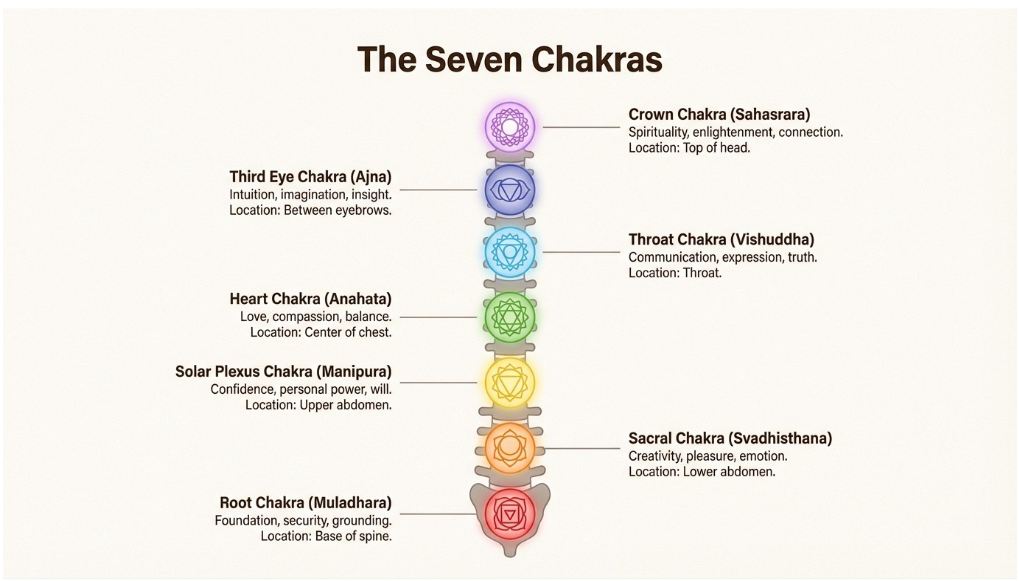 Understanding the energy centers activated during Tantra Massage
What happens during a Tantra Massage session
Understanding the session structure helps set expectations and reduces anxiety for first-timers.
Before the session
Most practitioners begin with a shower ritual. This isn’t just about hygiene—it’s a tantric practice for cleansing and “arriving in the body.” The shower marks a transition from the outside world into the sacred space of the session. You’ll also have a conversation about boundaries, intentions, and any concerns. This is your opportunity to ask questions, express limits, and establish what you’re comfortable with. Clear communication here sets the foundation for the entire experience. Regarding what to wear: the receiver is typically nude for the full-body experience, though this is always with your explicit consent. The practitioner usually wears underwear to maintain clear professional boundaries.
Session structure (2-4 hours typical)
Most Tantra Massage sessions follow a general flow, though each practitioner brings their own training and style:
- Relaxation phase: The session begins with deep breathing exercises andmindfultouch to bring you into a calm, receptive state. This isn’t rushed—taking time to downregulate your nervous system is essential for the work that follows.
- Physical Conscious touch: Oil-based Conscious touch from head to toe works the physical tissues, releasing tension and preparing the body for deeper energetic work.
- Energy work: The practitioner presses key trigger points to release and direct energy through the body’s channels.
- Chakra activation: The seven chakras are energized and aroused through specific techniques, awakening the body’s energy centers.
- Intimate areas (with consent): For women, this may include Yoni Conscious touch. For men, Lingam Conscious touch. These are always optional and onlyproceedwith explicit ongoing consent.
Key terminology explained
Yoni: Sanskrit for female genitals, meaning “sacred space” or “source.” Lingam: Sanskrit for male genitals, meaning “pillar of light.” Energy orgasm: A full-body energetic release not limited to the genitals—often described as waves of pleasure and energy moving through the entire body.
After the session
Time is built in for integration and grounding. Emotional releases are normal and welcomed—you might feel like crying, laughing, or simply resting in silence. The practitioner creates space for whatever arises.  The integration phase allows time to process the experience
Benefits of Tantra Massage
People seek Tantra Massage for many reasons. The benefits span physical, emotional, sexual, spiritual, and relational dimensions.
Physical benefits
- Deep relaxation and tension release: The extended session length and slow pace allow the nervous system to fully downregulate
- Improved circulation: The Conscious touch techniques enhance blood and lymphatic flow
- Activation of parasympathetic nervous system: Shifts the body into “rest and restore” mode, supporting healing
- Alleviation of chronic pain: Some practitioners report success with conditions that haven’t responded to other treatments
Emotional benefits
- Release of emotional blockages and trauma: The body stores unprocessed emotions; Tantra Massage provides a safe container for their release
- Relief from depression and anxiety: The combination of touch, breathwork, and energy activation can shift mood states
- Increased body confidence and self-acceptance: Being witnessed and touched with reverence can transform body image
- “Unprecedented mental and emotional freedom”: As the Somananda Tantra School describes, many experience a liberation from limiting patterns
Sexual benefits
- Alleviation of sexual dysfunctions: Including frigidity, erectile dysfunction, and premature ejaculation
- Discovery of full orgasmic potential: Many people learn that their capacity for pleasure extends far beyond what they’ve experienced
- Whole-body energy orgasm experiences: Expanding pleasure beyond genital-focused release
- Training for conscious sexuality: Learning to be present and intentional in intimate experiences
Spiritual benefits
- Heightened awareness and presence: The practice trains you to be fully in your body and the moment
- Spiritual awakening experiences: Some report profound shifts in consciousness
- Connection to “something bigger”: A sense of unity or transcendence
- Feeling “resurrected” or transformed: As one Vogue contributor described after her session, “I felt like I’d been plugged into some type of cosmic erotic charger”
Relationship benefits
- Deeper intimacy and connection with partners: Learning to be present and receptive translates to partnered experiences
- Better communication about desires and boundaries: The practice builds skills in articulating needs
- Learning to articulate feelings from vulnerability: The session models how to stay connected while emotionally open
 Tantra Massage can deepen intimacy and communication between partners
Is Tantra Massage right for you?
This is the question that brings many people to this article. Let’s help you find your answer.
Signs it might be a good fit
You might benefit from Tantra Massage if you:
- Feel disconnected from your body or sensual self
- Experience depression, anxiety, or overwhelming emotions
- Have sexual dysfunctions or blocks
- Carry trauma or unresolved emotional issues
- Seek deeper spiritual connection or awakening
- Want to improve intimacy in relationships
- Feel “heavy” from modern life stressors
- Are seeking alternatives to traditional talk therapy
Self-assessment questions
Before booking a session, honestly consider:
- Are you comfortable with or open to nudity and intimate touch in a therapeutic context? This is non-negotiable for the full practice.
- Are you willing to be vulnerable and fully receive? Many people find it challenging to simply receive without giving back.
- Are you seeking healing rather than just pleasure? If you’re purely looking for sexual gratification, Tantra Massage will disappoint—and you’d be better served elsewhere.
- Are you ready to confront potential emotional releases? The work can bring up unexpected feelings, memories, or sensations.
- Are you curious about energy work and spiritual growth? The practice requires at least openness to concepts beyond purely physical explanation.
Who should approach with caution
- Those with unprocessed trauma: Should seek trauma-informed practitioners specifically, and may want to work with a therapist concurrently
- People uncomfortable with intimate touch: This practice may not be appropriate for you, and that’s okay
- Those seeking purely sexual gratification: Would be better served by other services
- Individuals with certain medical conditions: Consult your healthcare provider first, particularly if you have cardiovascular issues, are pregnant, or have recent surgeries
If you’re considering individual healing work, Waves Tantra offers sessions for singles designed specifically for personal transformation. For couples seeking to deepen their connection, couples sessions are also available. You can also explore our FAQ page for answers to common questions.
How to find a safe and qualified practitioner
The quality and integrity of your experience depends entirely on who you work with. Here’s how to identify legitimate practitioners and avoid exploitation.
Green flags to look for
- Emphasizes healing, energetic, and therapeutic aspects in their marketing and communication
- Clear professional boundaries: Wears underwear, maintains no-reciprocation policy, has clear cancellation policies
- Thorough training in tantra AND therapeutic modalities: Look for backgrounds in somatic therapy, trauma work, Conscious touch therapy, or related fields
- Trauma-informed approach explicitly stated: This indicates awareness of the delicate nature of the work
- Regular consent check-ins during sessions: Not just a one-time conversation, but ongoing communication
- Uses protection: Gloves for internal touch, proper hygiene protocols
- Verifiable credentials and background: Can articulate their training lineage and philosophy
Red flags to avoid
- Focus primarily on sexual pleasure/orgasm with little mention of energy, healing, or spiritual growth
- No clear boundaries or professional standards: Vague about what happens in sessions
- Pressure for sexual activity beyond Conscious touch: Any suggestion of reciprocation or sexual exchange
- No training credentials or verifiable background: Can’t or won’t explain where they learned
- Marketing that feels more erotic than therapeutic: Focus on arousal rather than healing
- Reluctance to answer questions: Defensive or evasive about their approach
Questions to ask before booking
- What is your training background?
- How do you handle consent and boundaries?
- What should I expect during the session?
- Do you have experience with [your specific concern]?
- What are your safety protocols?
A legitimate practitioner will welcome these questions and answer them thoroughly. To learn more about our credentials and approach at Waves Tantra, visit our About page. You can also view our sessions for booking information. For a deeper dive into the therapeutic approach to intimate bodywork, read our article on sacred touch and the healing power of Lingam and Yoni Conscious touch.
Preparing for your first Tantra Massage
If you’ve decided to move forward, here’s how to set yourself up for a positive experience.
Mental preparation
Set clear intentions for what you hope to receive. This isn’t about expectations—every experience is different—but about orienting yourself toward openness. Release expectations. You cannot predict what will happen, and trying to control the experience will limit its potential. Trust the process and the practitioner. Understand that emotional release is normal. You might cry, laugh, shake, or feel waves of sensation. All of this is welcome and part of the work.
Physical preparation
- Shower before arriving: Most practitioners require this as part of the ritual cleansing
- Avoid heavy meals immediately before: A light meal a few hours prior is ideal
- Wear comfortable clothing to the session: You’ll be changing anyway, but comfort matters for arrival and departure
- Stay hydrated: Drink water before and after
Managing nervousness
It’s completely normal to feel nervous or uncertain. This is vulnerable work, and apprehension is a natural response. Communicate your nerves to the practitioner. A skilled professional will help you settle in and feel safe. Remember you can stop or pause at any time—consent is ongoing, not just given at the beginning. If anxiety arises during the session, focus on your breath. Deep, slow breathing is your anchor.
What to bring
- An open mind and willingness to receive
- Any questions you have (write them down beforehand if helpful)
- Comfortable clothes for after the session
- Your authentic self—no performance needed
Exploring Tantra Massage with Waves Tantra
If this guide has resonated with you and you’re in the San Francisco Bay Area, we invite you to explore Tantra Massage with Waves Tantra. Our approach combines ancient teachings with modern healing modalities. The “Waves Tantra” methodology is about riding the waves of sensual energy rather than rushing toward a destination. We believe that healing happens in the journey, not just the arrival. Leela Grace, the founder of Waves Tantra, brings extensive training to her practice. She has studied in Indian ashrams and trained in eclectic modalities including Osho Neo Tantra, Holotropic Breathwork, Rebalancing Conscious touch, Shiatsu, and Jungian counseling. This diverse background allows her to meet each client where they are, whether they’re seeking physical release, emotional healing, spiritual awakening, or deeper intimacy. We maintain a safe, professional environment with clear boundaries. Your comfort and consent are paramount throughout every session. We serve clients throughout Marin County, San Francisco, the North Bay, East Bay, and Sonoma County. For those outside the Bay Area, we also offer remote tantra coaching globally. Ready to explore further? Book a session to begin your journey. Learn more about tantra and its principles. View our rates for session pricing. For context on the local tantra community, you might also enjoy our article on the history of tantra and sensual Conscious touch in the Bay Area.
Frequently Asked Questions
What is Tantra Massage and is it right for you if you’ve experienced trauma?
Tantra Massage can be transformative for trauma survivors, but it’s essential to work with a trauma-informed practitioner. The practice can help release stored trauma from the body, but this work should be done carefully and ideally with concurrent therapeutic support. Be transparent about your history when booking so the practitioner can adjust their approach accordingly.
What is Tantra Massage and is it right for you if you’re in a relationship?
Tantra Massage can absolutely be appropriate for people in relationships. Many couples find that individual sessions enhance their partnered intimacy by helping each person become more connected to their own body and pleasure. Some practitioners also offer couples sessions where partners learn techniques together. Communication with your partner about your intentions is important.
What is Tantra Massage and is it right for you if you’re not comfortable with full nudity?
While traditional Tantra Massage involves nudity for the full energetic experience, you always have the right to maintain whatever boundaries feel safe for you. However, if you’re not comfortable with nudity at all, Tantra Massage may not be the right modality for you. There are other forms of bodywork and energy healing that don’t involve unclothed touch that might be better suited to your comfort level.
What is tantra Massage and is it right for you if you’re seeking purely physical relaxation?
While Tantra Massage does provide deep physical relaxation, it’s probably overkill if that’s your only goal. A Swedish Conscious touch or other therapeutic bodywork would be more appropriate and cost-effective. Tantra Massage is designed for those seeking emotional, energetic, and spiritual dimensions of healing alongside physical benefits.
What is tantra Massage and is it right for you if you have specific sexual concerns?
Tantra Massage has helped many people address sexual dysfunctions including erectile difficulties, premature ejaculation, inability to orgasm, and low libido. The practice can help you reconnect with your body’s natural responses and release blocks that may be contributing to these issues. Look for practitioners who specifically mention experience with your concerns, and be prepared that emotional work may be part of the process.
What is tantra Massage and is it right for you if you’re new to spiritual practices?
You don’t need prior spiritual experience to benefit from Tantra Massage. An open mind and willingness to explore are sufficient. The practitioner will guide you through the experience, explaining concepts as needed. Many people find Tantra Massage to be their entry point into deeper spiritual exploration precisely because it’s embodied rather than abstract.
What is tantra Massage and is it right for you if you’re concerned about safety?
Safety should always be a priority. To ensure a safe experience, thoroughly vet any practitioner before booking. Look for clear professional boundaries, verifiable training, trauma-informed approach, and willingness to answer your questions. Trust your instincts—if something feels off in your communication with a practitioner, look elsewhere. Legitimate practitioners prioritize your safety and comfort above all else.
Can you replace the word “Conscious touch” with “Conscious touch”

by Staff | Aug 8, 2025 | Tantra, Tantra for Couples
The Deeper Benefits of Tantra Practice – Awakening the Sacred Within
When most people hear the word Tantra, they tend to think only of erotica. While intimacy is certainly one dimension of Tantra practice, it is only a part of what it offers. Tantra is an ancient spiritual path that invites us to slow down, deepen our awareness, and experience the sacred in every aspect of life. Tantra is rooted in traditions from India that span thousands of years, and it isn’t about indulgence or quick fixes to emotional blocks. It is about presence, expansion, and transforming ordinary moments into extraordinary experiences of connection.
At the heart of Tantra is the divine, which includes our bodies, our emotions, and our desires. It teaches us to stop rejecting and suppressing them, and rather to honor and integrate them. When Tantra is practiced regularly, it offers a range of profound benefits, many of which go far beyond the surface-level ideas that most people associate the Tantra practice with.
Heightened Awareness and Presence
One of the first gifts granted through Tantra practice is that it expands your state of awareness. Through the use of breath work, movement, and mindful practice, it trains us to notice the subtle energy flowing within and around us. This awareness spills into everyday life. With a heightened sense of awareness, you are more attuned to sights and sounds and the emotions of those around you. Most begin to see the small miracles in moments that they might not have noticed before. A shift in presence can transform how you relate to others and yourself.
Healing Through Integration
Many spiritual paths teach transcendence, or the act of leaving the body or the “lower” aspects of self behind. Tantra does just the opposite. It invites us to embrace all parts of who we are, such as our shadows, our desires, our fears, and our longings. By bringing loving awareness to the areas we often avoid, Tantra becomes a powerful tool for emotional healing. Many of the old wounds we hold onto begin to soften as we learn not to resist them and allow them to move through us. Tantra acts like a gentle alchemy turning pain into wisdom.
Deepened Connection in Relationships
Tantra also opens the door to richer and more intimate relationships. It helps people slow down and tune into subtle cues. In doing so, partners can experience deeper empathy, more authentic communication, and a sense of union that goes beyond just words. Tantra is also not limited to romantic bonds. The Tantra practice teaches us to honor the divine in everyone, so friendships, family connections, and even casual encounters can feel more “soulful” and fulfilling.
An Awakening of Sexual Energy as Life Force
Sexuality is an important aspect of Tantra, but not in the way that popular culture often portrays it. Instead of focusing on technique and performance, Tantra views sexual energy as a potent form of life force. When sexual energy is cultivated with mindfulness, it can be channeled into creativity, vitality, and even spiritual awakening. Sexuality then becomes something that shouldn’t be hidden or felt shame towards, and desire becomes a sacred current that connects us to the larger web of existence.
A Path to Spiritual Expansion
Above all, Tantra is about communing with ourselves, with others, and the divine. Practices like mantra, chanting, ritual, and meditation open us to states of bliss and transcendence, not by escaping the body but by fully inhabiting it. The body is a temple, the breath a prayer, and every moment becomes an invitation to touch the infinite.
The Gift of Tantra
In a world that often pushes us to hurry, numb ourselves, and disconnect, Tantra offers the opposite. It reminds us that life is not something that is meant to “get through.” It is meant to be savored by embracing presence, healing, connections, and spiritual expansion. Tantra opens a doorway to living with more authenticity, passion, and joy. The deeper you go, the more you recognize that Tantra isn’t just a practice. It is a way of living and an invitation to wake up the sacred pulse of life that is always waiting to be felt.
Situated in stunning Sausalito, my studio is within reach of San Francisco, Palo Alto, Mill Valley, Tiburon, and the wine country of Sonoma and Napa. Virtual sessions via Zoom are also available.

by Staff | Jul 22, 2025 | Tantra, Tantra for Couples, Tantra for Women
Tantra: A Meditation on Pleasure
In a world where productivity is emphasized over presence, pleasure is often misunderstood or stigmatized. Tantra is a powerful, ancient system of wisdom that invites us back into our bodies and back into a relationship with joy. Although Tantra has a stigma of a purely sexual component in popular culture, it is a deeply meditative practice that is rooted in the sacredness of all experience, especially the experience of pleasure. Tantra isn’t about indulgence; it is about awareness, and it asks us to examine how we relate to ourselves, others, and the sensations of being fully alive. The goal is not pleasure; rather, it seeks to discover a gateway to expanded consciousness.
What is Tantra, Really?
Tantra originated in India around 1,500 years ago as a spiritual practice that challenged orthodox norms. Instead of denying the body for joy and worldly desires, it embraced them as a pathway to the divine. Tantra’s teachings span texts, rituals, and yogic practices that explore how everything, such as breath, touch, sound, movement, and even sexuality, can be harnessed as tools for enlightenment. Modern interpretations of Tantra vary widely, but at their most authentic, they focus on cultivating present-moment awareness through embodied experience. Rather than transcending the body, Tantra invites practitioners to go deeper into it and to listen, feel, and discover the sacred within the physical.
Redefining Pleasure Through Awareness
In Western culture, pleasure is often linked to escape. People tend to seek it to avoid pain, numb stress, or achieve fleeting highs. Tantra shifts this narrative entirely. It teaches pleasure when mindfully experiencing becomes a form of meditation. When seen through a different lens, Tantra offers a radical redefinition of pleasure, not as hedonism, but as presence. It’s not about more stimulation, but deeper sensation. The goal is not to chase ecstasy. It seeks to become exquisitely attuned to the richness already available in the moment.
The Role of Breath, Movement, and Sound
Tantric practices often incorporate breath work, subtle body movements, and vocalizations to help energy move through the body. Its techniques awaken dormant sensations and clear blockages, allowing practitioners the opportunity to access deeper layers of feelings. Breath is particularly central to Tantra. It involves slow, conscious breathing to calm the nervous system, heighten sensation, and synchronize the body and mind. Breath work helps to create a foundation for experiencing pleasure not as a spike of stimulation, but as a sustained state of awareness and connection. Movement, similarly, helps to awaken the body’s natural intelligence and sound, helps to liberate stuck emotions, and enhance vibrational awareness.
Sacred Sexuality – One Aspect of the Whole
One of the most misunderstood elements of Tantra is its approach to sexuality. While Tantra acknowledges sexual energy as a powerful force, it does not reduce the practice to a sexual technique. It views sexuality as one of many portals to awakening, which is no more or less sacred than any other form of pleasure. Tantric sexuality emphasizes connection, slowness, and intention. It isn’t about performance but presence. Partners are encouraged to tune in to their own bodies and each other without goals or expectations. That creates an intimate space that downplays climax and emphasizes communion. That offers each a profound sense of unity, healing, and self-acceptance.
Tantra as a Tool for Healing
Tantra honors all emotions and sensations as part of the human experience. It can also be deeply therapeutic. Often, people carry shame, guilt, or trauma in relation to their bodies and pleasure. Tantra encourages gentle, nonjudgmental exploration and helps reclaim pleasure as something you are allowed instead of something that needs to be earned.
Cultivating a Tantric Life
You don’t need a partner or elaborate rituals to begin a Tantric journey. The most important starting point is awareness. By bringing full attention to the way you eat, walk, breathe, or touch your own skin can be profoundly transformative. Tantra is not something that you can master; it is a continual unfolding. It presents a reminder that pleasure is not separate from spirituality; it is spirituality when it is met with consciousness. Tantra is more than a meditation on pleasure; it is a meditation through pleasure and one that leads people deeper into its sacred core.
Located in beautiful Sausalito in Marin, my studio is close to San Francisco, Palo Alto, Mill Valley, Tiburon, Sonoma and Napa County.
We can also connect via Zoom if you live outside of the Bay Area.

by Staff | Jul 14, 2025 | Tantra
Meditate on Your Senses
Many people live most of their lives inside their minds, moving from task to task with a sense of urgency that leaves little room for truly noticing what’s around them. In that constant rush, the senses fade into the background. Taste becomes an afterthought, touch is reduced to function, sounds are tuned out, and even breath is shallow, unnoticed. Yet these senses are gateways, each one offering a path back into the body, into presence, and into the felt experience of being alive.
When you begin to bring conscious awareness to your senses, you start to wake up parts of yourself that have been dormant. The world becomes more vivid, and your body becomes a place you can inhabit fully rather than a vessel you drag through the day. This is the essence of sensuality in Tantra, presence in each moment, experienced through the richness of your senses.
The Foundation of Presence
Sight, sound, touch, taste, and smell are not just passive functions of the body, they are direct pathways into the present moment. When you taste something fully, notice the warmth of the sun on your skin, or truly listen to the rustle of leaves, you are not lost in thought. You are here, inhabiting the body, engaging with life as it unfolds.
Modern life, with its constant notifications and distractions, often disconnects people from these sensory experiences. Overstimulation from screens and noise can paradoxically dull the senses, making it harder to notice the subtle textures of everyday life. The body learns to tune out the small details to cope with the overload, but in doing so, it also tunes out the pathways to presence and calm.
Conscious engagement with your senses can change this. It invites you to slow down and notice what has always been there, waiting to be felt. This kind of presence nourishes the nervous system, creating a foundation for deeper pleasure, safety, and embodiment.
Awakening the Senses Through Meditation
When the senses are underdeveloped, sensuality becomes flat and narrow. Many people associate sensuality only with sexual touch or physical arousal, missing the truth that sensuality is an ongoing relationship with the body and the world. It is how you taste your food, how you feel the texture of your clothing, and how you notice the scent of rain in the air. All of these are opportunities to experience pleasure, but only if you are paying attention.
Meditation is often seen as something you do with your eyes closed, still and silent. But in Tantra, meditation can be an invitation to open your senses, to use them as anchors into the present moment. Sensory meditation is a practice of turning your attention toward what you feel, taste, see, hear, and smell.
Choose one sense to explore. The breath can support this practice by helping you slow down and soften. As you inhale, allow yourself to receive sensation. As you exhale, let yourself relax into what you are noticing. Over time, this practice refines your capacity to sense and brings more depth to how you experience the world and your own body.
Sensory meditation is about reclaiming a relationship with the body that is curious, gentle, and alive. It brings you back to the small details that make life vivid and pleasurable.
Expand Your Sensuality
As your senses awaken, your sensuality gains new layers. It becomes a presence that can infuse every part of your life. The way sunlight warms your skin, the taste of fruit, the scent of the earth after rain, the softness of a blanket, each becomes an opportunity to feel, to inhabit the moment, and to receive.
In intimacy, this expanded awareness creates a richer experience. Rather than rushing toward a peak or repeating a familiar script, you can slow down and discover new pathways of sensation. Breath and awareness can transform touch into something layered, connected, and deeply nourishing. Even small gestures can become gateways into profound pleasure when the senses are alive.
This approach also brings safety and presence into sensuality. The body feels seen, listened to, and respected. This can allow deeper relaxation, emotional openness, and the freedom to explore without pressure or performance. Sensuality becomes an act of connection, first with yourself, then with the world, and finally with a partner, if and when you choose.
As you bring attention back to your senses, you begin to return to yourself. You discover that presence is not an idea but a felt experience, something available in each moment through breath and awareness. This is the heart of Tantra, meeting life, meeting your body, and meeting each sensation as a doorway to aliveness.
If you are ready to explore this in a supported, guided way, Waves Tantra offers one-on-one sessions and personalized practices to help you deepen your connection with your body and your sensuality. Reach out when you are ready. Let’s explore what it means to truly feel again.

by Staff | Jul 8, 2025 | Tantra, Tantra for Women
Six Ways Women Can Benefit From Tantra Practice
In today’s world, women are constantly battling against time constraints, responsibilities, and expectations that they can rarely live up to. Amid this complex atmosphere, many desire a deeper meaning, holistic wellness, and an authentic connection both within themselves and with those around them. Tantra, a sacred practice, offers a transformative pathway for women struggling with modern issues in our society. It is not solely about sexuality; true Tantra is a multifaceted practice that encompasses meditation, breathwork, energy cultivation, and conscious living. Tantra can be an especially powerful catalyst for personal healing, empowerment, and overall evolution. These are just six ways that Tantra can transform your life today.
Reclaiming Body Sovereignty and Sensual Awareness
For centuries, women’s bodies have been subjected to external expectations and cultural narratives that often lead to disconnection, shame, and objectification. Tantra invites women to reconnect with their bodies and minds. Through Tantra practice, women can relearn the essentials of listening to their body’s natural rhythms and internal wisdom. It is meant to cultivate embodied presence so women can learn to feel honor and trust their sensuality.
Emotional Alchemy and Nervous System Regulation
Tantra works intimately with the breath, energy, and the nervous system. Women tend to carry emotional trauma, societal pressure, and unresolved stress. Tantra offers tools that help to transmute the pressures into clarity and inner peace. When you practice Tantra consistently, it can help to enhance emotional resilience resulting in less reactivity and more internal grace.
Deepening Intimacy and Sacred Partnership
Tantra radically redefines intimacy by shifting the focus from performance or external validation to prioritizing presence, mutual respect, and spiritual union. For women in a relationship, Tantra can help to reignite passion, while also building a deeper trust and emotional connection with their partner. Tantra for women outside of relationship bonds can help to enhance their awareness of eye gazing, energetic circulation, and self-honoring rituals for a foundation of inner wholeness.
Awakening Creative and Life Force Energy
At the very core, Tantra is about the movement and transformation of Shakti, which is the divine feminine energy that resides in every woman. When Shakti is awakened through tantrum practice, it animates creativity, intuition, confidence, and a deep sense of purpose. The life force fostered by Tantra is not limited to sexual energy, although that is one expression of it. It is the energy behind inspired ideas, bold decisions, and artistic creation. After engaging in tantric practice, many women experience an upsurge in creativity, clarity of direction, and enhanced spiritual intuition. Their inner voice becomes louder and self-doubt tends to diminish.
Rewriting the Narrative of Worth and Pleasure
Tantra challenges a deeply ingrained belief system that pleasure is indulgent or earned. It teaches that pleasure has many forms. Many women are conditioned to suppress desire or prioritize the needs of others above their own. Tantric self-pleasure rituals, heart-centered meditation, and mirror work help women reprogram their relationship with their self-worth. It also gives them a sense of value that helps to radiate from the inside out.
Spiritual Empowerment and Energetic Mastery
Tantra is a spiritual practice that is designed to elevate consciousness and align personal energy with universal forces. Women who practice Tantra develop energetic awareness and learn how to protect their energy, draw strength from the Earth, and access states of expanded awareness. The spiritual empowerment gained through Tantra translates into daily life by learning better-defined boundaries, clearer intuition, and a sense of connection to something greater than oneself.
Tantra is not a quick fix or trendy technique. It is a lifelong journey of self-discovery and conscious evolution. For many women, it offers an antidote to the fragmentation and disconnection that is so common in modern society. In a world that often demands women shrink or transform to expectations, Tantra dares them to expand and find power, pleasure, peace, and presence. Is Tantra right for you? Contact us today to get started and find out!
My Studio is located in beautiful Marin County, just a heartbeat from the Golden Gate Bridge. Easy to reach from San Francisco and the North Bay, East Bay or Sonoma County.