

You’ve probably heard whispers about tantra Massage. Maybe a friend mentioned it in hushed tones, or you stumbled across it while researching alternative healing modalities. The word “tantra” carries weight—it evokes images of ancient temples, mystical practices, and yes, often sexual connotations that may leave you curious but also confused. Here’s the truth: Tantra Massage is one of the most misunderstood wellness practices today. It’s been sensationalized, stigmatized, and sometimes exploited. But beneath the misconceptions lies a legitimate healing modality that has helped thousands of people reconnect with their bodies, release trauma, and experience profound emotional and spiritual transformation. This guide will give you the straight answers you’re looking for. We’ll clear up the biggest myths about Tantra Massage, explain what actually happens during a session, explore the benefits (physical, emotional, and spiritual), and help you decide whether this practice aligns with your needs and comfort level. We’ll also cover how to find a safe, qualified practitioner—because not everyone advertising “Tantra Massage” has your wellbeing in mind. Whether you’re simply curious, actively seeking healing, or wondering if this modality could address specific concerns, you’ll leave this article with clarity and confidence to make an informed decision. 
Clearing up the biggest misconceptions about Tantra Massage
Before we explore what Tantra Massage is, we need to address the elephant in the room. The practice carries significant stigma, largely due to widespread misconceptions. Let’s clear them up with honesty and compassion.
Misconception 1: “It’s just a fancy term for erotic Conscious touch”
This is perhaps the most common misunderstanding. While both erotic Conscious touch and Tantra Massage may involve intimate touch, their intentions differ fundamentally. Erotic Conscious touch focuses primarily on sexual stimulation and gratification, typically with orgasm as the goal. Tantra Massage, by contrast, is therapeutic bodywork. The intention is healing, connection, and awareness—not sexual release. While intimate areas of the body may be included in the session (with explicit consent), the touch is slow, mindful, and energetically focused rather than sexually stimulating. As practitioners at Journey Within explain, Tantra Massage serves as “therapy and introduction to tantric path” rather than a route to sexual gratification.
Misconception 2: “It’s an ancient practice from India”
This one surprises many people. While Tantra itself is indeed an ancient spiritual tradition originating in India over 5,000 years ago, Tantra Massage as we know it today is a modern Western development. According to the Tantric Conscious touch Association and Wikipedia, Tantra Massage emerged in Europe toward the end of the 20th century (1960s-1980s). It was developed by modern practitioners including Joseph Kramer (who developed “Lingam Conscious touch” and “Taoist Erotic Conscious touch”), Annie Sprinkle (who developed “Yoni Conscious touch”), and others who synthesized ancient Tantric philosophies with contemporary bodywork techniques. Understanding this distinction matters. Ancient Tantra is a comprehensive spiritual path involving meditation, yoga, breathing practices, and philosophy. Neotantra—the modern adaptation—often focuses more specifically on sexuality and bodywork as vehicles for healing and awakening.
Misconception 3: “It’s always sexual and ends in orgasm”
WebMD clarifies this point directly: “The goal is not always to achieve orgasm.” MasterClass reinforces this, stating that “connection, not orgasms, are the goal.” Here’s what actually happens: orgasms may occur during a session as a natural result of deep relaxation and energy activation, but they are never the goal. The practice is meditative, slow, and mindful—not focused on performance or climax. Many sessions don’t involve orgasm at all, and that’s perfectly aligned with the work.
Misconception 4: “You need a partner to practice it”
Tantra Massage is most commonly practiced with a professional practitioner in an individual session. You don’t need a romantic partner, and in fact, the dynamic is specifically designed as a one-way receiving experience—you don’t reciprocate touch. Solo practices also exist for personal exploration, and couples can learn techniques to practice on each other. But the most common entry point is individual work with a trained professional.
What Tantra Massage actually is
Now that we’ve cleared away the misconceptions, let’s explore what this practice actually entails.
Definition and core philosophy
Tantra Massage is an energetically-based form of bodywork that integrates principles of Tantra. It focuses on balancing energy, releasing emotional blockages, and awakening sensual and spiritual awareness. The philosophy is non-dualistic: body and soul are considered sacred and interconnected. Nothing is left untouched—including areas typically deemed “untouchable” by social norms. This doesn’t mean everything is sexualized; rather, it means the entire body is approached as a unified field of energy and consciousness, without the compartmentalization Western culture often imposes.
Key elements of the practice
Energy work: The practice works with the body’s subtle energy channels (nadis) and chakras. Practitioners are trained to sense and direct energy flow, releasing blockages and activating dormant vitality. Breathwork: Deep, conscious breathing is central to the experience. Breath activates sexual energy (which in tantric philosophy is simply life force energy) and engages the parasympathetic nervous system—the “rest and restore” mode that allows deep healing. Mindful touch: The touch in Tantra Massage is slow, deliberate, and intuitive. It’s not rushed or mechanical like some therapeutic Conscious touch can be. Each movement is an invitation to presence. Eye gazing: Maintaining eye contact builds connection and presence between practitioner and receiver. This can feel vulnerable but is part of the practice’s power. Consent and boundaries: Regular check-ins ensure comfort and safety. The receiver does not reciprocate touch—their role is purely to receive, which itself can be transformative for people who are always giving in their daily lives.
How it differs from other bodywork
| Feature | Tantra Massage | Swedish Conscious touch | Thai Conscious touch | Reiki |
| Primary focus | Energy & emotional release | Physical muscle relaxation | Stretching & compression | Energy channeling |
| Session length | 1.5-4 hours | 60-90 minutes | 60-120 minutes | 45-90 minutes |
| Intimate touch | May include (with consent) | No | No | No |
| Clothing | Typically unclothed | Under sheet/underwear | Loose clothing | Fully clothed |
| Breathwork | Central component | Not typically included | Coordinated with movement | Not typically included |
| Spiritual component | Core to practice | None | Buddhist origins | Spiritual/energetic |
The key distinction is Tantra Massage’s focus on energetic and emotional dimensions, not just physical manipulation. While a Swedish Conscious touch might leave your muscles relaxed, a Tantra Massage aims to shift your entire state of being. 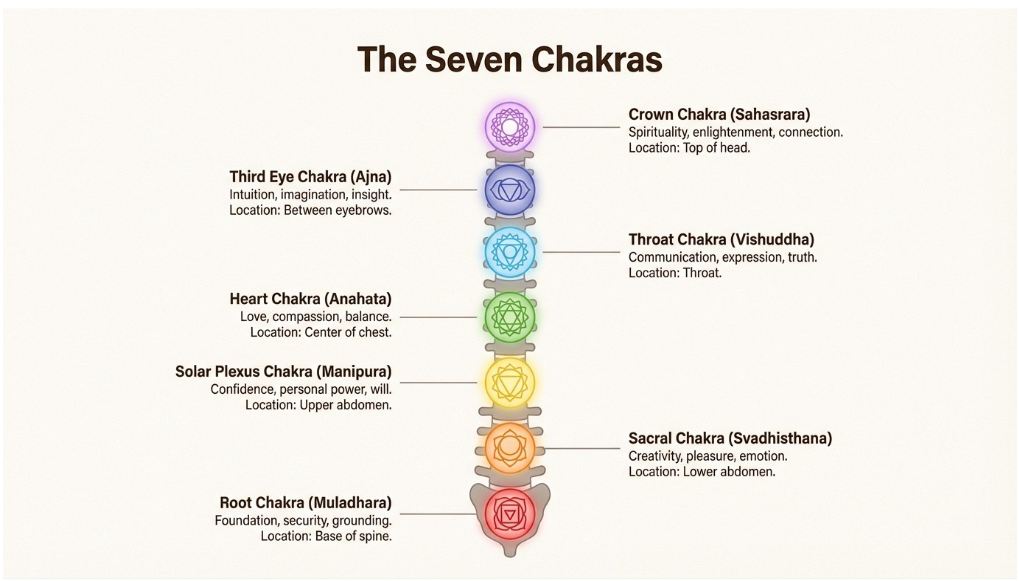 Understanding the energy centers activated during Tantra Massage
What happens during a Tantra Massage session
Understanding the session structure helps set expectations and reduces anxiety for first-timers.
Before the session
Most practitioners begin with a shower ritual. This isn’t just about hygiene—it’s a tantric practice for cleansing and “arriving in the body.” The shower marks a transition from the outside world into the sacred space of the session. You’ll also have a conversation about boundaries, intentions, and any concerns. This is your opportunity to ask questions, express limits, and establish what you’re comfortable with. Clear communication here sets the foundation for the entire experience. Regarding what to wear: the receiver is typically nude for the full-body experience, though this is always with your explicit consent. The practitioner usually wears underwear to maintain clear professional boundaries.
Session structure (2-4 hours typical)
Most Tantra Massage sessions follow a general flow, though each practitioner brings their own training and style:
- Relaxation phase: The session begins with deep breathing exercises andmindfultouch to bring you into a calm, receptive state. This isn’t rushed—taking time to downregulate your nervous system is essential for the work that follows.
- Physical Conscious touch: Oil-based Conscious touch from head to toe works the physical tissues, releasing tension and preparing the body for deeper energetic work.
- Energy work: The practitioner presses key trigger points to release and direct energy through the body’s channels.
- Chakra activation: The seven chakras are energized and aroused through specific techniques, awakening the body’s energy centers.
- Intimate areas (with consent): For women, this may include Yoni Conscious touch. For men, Lingam Conscious touch. These are always optional and onlyproceedwith explicit ongoing consent.
Key terminology explained
Yoni: Sanskrit for female genitals, meaning “sacred space” or “source.” Lingam: Sanskrit for male genitals, meaning “pillar of light.” Energy orgasm: A full-body energetic release not limited to the genitals—often described as waves of pleasure and energy moving through the entire body.
After the session
Time is built in for integration and grounding. Emotional releases are normal and welcomed—you might feel like crying, laughing, or simply resting in silence. The practitioner creates space for whatever arises.  The integration phase allows time to process the experience
Benefits of Tantra Massage
People seek Tantra Massage for many reasons. The benefits span physical, emotional, sexual, spiritual, and relational dimensions.
Physical benefits
- Deep relaxation and tension release: The extended session length and slow pace allow the nervous system to fully downregulate
- Improved circulation: The Conscious touch techniques enhance blood and lymphatic flow
- Activation of parasympathetic nervous system: Shifts the body into “rest and restore” mode, supporting healing
- Alleviation of chronic pain: Some practitioners report success with conditions that haven’t responded to other treatments
Emotional benefits
- Release of emotional blockages and trauma: The body stores unprocessed emotions; Tantra Massage provides a safe container for their release
- Relief from depression and anxiety: The combination of touch, breathwork, and energy activation can shift mood states
- Increased body confidence and self-acceptance: Being witnessed and touched with reverence can transform body image
- “Unprecedented mental and emotional freedom”: As the Somananda Tantra School describes, many experience a liberation from limiting patterns
Sexual benefits
- Alleviation of sexual dysfunctions: Including frigidity, erectile dysfunction, and premature ejaculation
- Discovery of full orgasmic potential: Many people learn that their capacity for pleasure extends far beyond what they’ve experienced
- Whole-body energy orgasm experiences: Expanding pleasure beyond genital-focused release
- Training for conscious sexuality: Learning to be present and intentional in intimate experiences
Spiritual benefits
- Heightened awareness and presence: The practice trains you to be fully in your body and the moment
- Spiritual awakening experiences: Some report profound shifts in consciousness
- Connection to “something bigger”: A sense of unity or transcendence
- Feeling “resurrected” or transformed: As one Vogue contributor described after her session, “I felt like I’d been plugged into some type of cosmic erotic charger”
Relationship benefits
- Deeper intimacy and connection with partners: Learning to be present and receptive translates to partnered experiences
- Better communication about desires and boundaries: The practice builds skills in articulating needs
- Learning to articulate feelings from vulnerability: The session models how to stay connected while emotionally open
 Tantra Massage can deepen intimacy and communication between partners
Is Tantra Massage right for you?
This is the question that brings many people to this article. Let’s help you find your answer.
Signs it might be a good fit
You might benefit from Tantra Massage if you:
- Feel disconnected from your body or sensual self
- Experience depression, anxiety, or overwhelming emotions
- Have sexual dysfunctions or blocks
- Carry trauma or unresolved emotional issues
- Seek deeper spiritual connection or awakening
- Want to improve intimacy in relationships
- Feel “heavy” from modern life stressors
- Are seeking alternatives to traditional talk therapy
Self-assessment questions
Before booking a session, honestly consider:
- Are you comfortable with or open to nudity and intimate touch in a therapeutic context? This is non-negotiable for the full practice.
- Are you willing to be vulnerable and fully receive? Many people find it challenging to simply receive without giving back.
- Are you seeking healing rather than just pleasure? If you’re purely looking for sexual gratification, Tantra Massage will disappoint—and you’d be better served elsewhere.
- Are you ready to confront potential emotional releases? The work can bring up unexpected feelings, memories, or sensations.
- Are you curious about energy work and spiritual growth? The practice requires at least openness to concepts beyond purely physical explanation.
Who should approach with caution
- Those with unprocessed trauma: Should seek trauma-informed practitioners specifically, and may want to work with a therapist concurrently
- People uncomfortable with intimate touch: This practice may not be appropriate for you, and that’s okay
- Those seeking purely sexual gratification: Would be better served by other services
- Individuals with certain medical conditions: Consult your healthcare provider first, particularly if you have cardiovascular issues, are pregnant, or have recent surgeries
If you’re considering individual healing work, Waves Tantra offers sessions for singles designed specifically for personal transformation. For couples seeking to deepen their connection, couples sessions are also available. You can also explore our FAQ page for answers to common questions.
How to find a safe and qualified practitioner
The quality and integrity of your experience depends entirely on who you work with. Here’s how to identify legitimate practitioners and avoid exploitation.
Green flags to look for
- Emphasizes healing, energetic, and therapeutic aspects in their marketing and communication
- Clear professional boundaries: Wears underwear, maintains no-reciprocation policy, has clear cancellation policies
- Thorough training in tantra AND therapeutic modalities: Look for backgrounds in somatic therapy, trauma work, Conscious touch therapy, or related fields
- Trauma-informed approach explicitly stated: This indicates awareness of the delicate nature of the work
- Regular consent check-ins during sessions: Not just a one-time conversation, but ongoing communication
- Uses protection: Gloves for internal touch, proper hygiene protocols
- Verifiable credentials and background: Can articulate their training lineage and philosophy
Red flags to avoid
- Focus primarily on sexual pleasure/orgasm with little mention of energy, healing, or spiritual growth
- No clear boundaries or professional standards: Vague about what happens in sessions
- Pressure for sexual activity beyond Conscious touch: Any suggestion of reciprocation or sexual exchange
- No training credentials or verifiable background: Can’t or won’t explain where they learned
- Marketing that feels more erotic than therapeutic: Focus on arousal rather than healing
- Reluctance to answer questions: Defensive or evasive about their approach
Questions to ask before booking
- What is your training background?
- How do you handle consent and boundaries?
- What should I expect during the session?
- Do you have experience with [your specific concern]?
- What are your safety protocols?
A legitimate practitioner will welcome these questions and answer them thoroughly. To learn more about our credentials and approach at Waves Tantra, visit our About page. You can also view our sessions for booking information. For a deeper dive into the therapeutic approach to intimate bodywork, read our article on sacred touch and the healing power of Lingam and Yoni Conscious touch.
Preparing for your first Tantra Massage
If you’ve decided to move forward, here’s how to set yourself up for a positive experience.
Mental preparation
Set clear intentions for what you hope to receive. This isn’t about expectations—every experience is different—but about orienting yourself toward openness. Release expectations. You cannot predict what will happen, and trying to control the experience will limit its potential. Trust the process and the practitioner. Understand that emotional release is normal. You might cry, laugh, shake, or feel waves of sensation. All of this is welcome and part of the work.
Physical preparation
- Shower before arriving: Most practitioners require this as part of the ritual cleansing
- Avoid heavy meals immediately before: A light meal a few hours prior is ideal
- Wear comfortable clothing to the session: You’ll be changing anyway, but comfort matters for arrival and departure
- Stay hydrated: Drink water before and after
Managing nervousness
It’s completely normal to feel nervous or uncertain. This is vulnerable work, and apprehension is a natural response. Communicate your nerves to the practitioner. A skilled professional will help you settle in and feel safe. Remember you can stop or pause at any time—consent is ongoing, not just given at the beginning. If anxiety arises during the session, focus on your breath. Deep, slow breathing is your anchor.
What to bring
- An open mind and willingness to receive
- Any questions you have (write them down beforehand if helpful)
- Comfortable clothes for after the session
- Your authentic self—no performance needed
Exploring Tantra Massage with Waves Tantra
If this guide has resonated with you and you’re in the San Francisco Bay Area, we invite you to explore Tantra Massage with Waves Tantra. Our approach combines ancient teachings with modern healing modalities. The “Waves Tantra” methodology is about riding the waves of sensual energy rather than rushing toward a destination. We believe that healing happens in the journey, not just the arrival. Leela Grace, the founder of Waves Tantra, brings extensive training to her practice. She has studied in Indian ashrams and trained in eclectic modalities including Osho Neo Tantra, Holotropic Breathwork, Rebalancing Conscious touch, Shiatsu, and Jungian counseling. This diverse background allows her to meet each client where they are, whether they’re seeking physical release, emotional healing, spiritual awakening, or deeper intimacy. We maintain a safe, professional environment with clear boundaries. Your comfort and consent are paramount throughout every session. We serve clients throughout Marin County, San Francisco, the North Bay, East Bay, and Sonoma County. For those outside the Bay Area, we also offer remote tantra coaching globally. Ready to explore further? Book a session to begin your journey. Learn more about tantra and its principles. View our rates for session pricing. For context on the local tantra community, you might also enjoy our article on the history of tantra and sensual Conscious touch in the Bay Area.
Frequently Asked Questions
What is Tantra Massage and is it right for you if you’ve experienced trauma?
Tantra Massage can be transformative for trauma survivors, but it’s essential to work with a trauma-informed practitioner. The practice can help release stored trauma from the body, but this work should be done carefully and ideally with concurrent therapeutic support. Be transparent about your history when booking so the practitioner can adjust their approach accordingly.
What is Tantra Massage and is it right for you if you’re in a relationship?
Tantra Massage can absolutely be appropriate for people in relationships. Many couples find that individual sessions enhance their partnered intimacy by helping each person become more connected to their own body and pleasure. Some practitioners also offer couples sessions where partners learn techniques together. Communication with your partner about your intentions is important.
What is Tantra Massage and is it right for you if you’re not comfortable with full nudity?
While traditional Tantra Massage involves nudity for the full energetic experience, you always have the right to maintain whatever boundaries feel safe for you. However, if you’re not comfortable with nudity at all, Tantra Massage may not be the right modality for you. There are other forms of bodywork and energy healing that don’t involve unclothed touch that might be better suited to your comfort level.
What is tantra Massage and is it right for you if you’re seeking purely physical relaxation?
While Tantra Massage does provide deep physical relaxation, it’s probably overkill if that’s your only goal. A Swedish Conscious touch or other therapeutic bodywork would be more appropriate and cost-effective. Tantra Massage is designed for those seeking emotional, energetic, and spiritual dimensions of healing alongside physical benefits.
What is tantra Massage and is it right for you if you have specific sexual concerns?
Tantra Massage has helped many people address sexual dysfunctions including erectile difficulties, premature ejaculation, inability to orgasm, and low libido. The practice can help you reconnect with your body’s natural responses and release blocks that may be contributing to these issues. Look for practitioners who specifically mention experience with your concerns, and be prepared that emotional work may be part of the process.
What is tantra Massage and is it right for you if you’re new to spiritual practices?
You don’t need prior spiritual experience to benefit from Tantra Massage. An open mind and willingness to explore are sufficient. The practitioner will guide you through the experience, explaining concepts as needed. Many people find Tantra Massage to be their entry point into deeper spiritual exploration precisely because it’s embodied rather than abstract.
What is tantra Massage and is it right for you if you’re concerned about safety?
Safety should always be a priority. To ensure a safe experience, thoroughly vet any practitioner before booking. Look for clear professional boundaries, verifiable training, trauma-informed approach, and willingness to answer your questions. Trust your instincts—if something feels off in your communication with a practitioner, look elsewhere. Legitimate practitioners prioritize your safety and comfort above all else.
Can you replace the word “Conscious touch” with “Conscious touch”