by Numan Shaikh | Mar 30, 2026 | Uncategorized
In the world of sacred sexuality and embodied spirituality, two traditions have quietly shaped much of what we now understand about energy, pleasure, and conscious living: Tantra and Taoism. Separately, each is a profound system of wisdom stretching back thousands of years. Together, they form a potent and complementary path known as Taoist Tantra — a practice that is drawing increasing interest from those seeking a deeper, more integrated approach to health, intimacy, and self-awareness.
For many people, the journey toward this practice begins with a nagging sense that something is missing — that despite all their efforts to be healthy, connected, and present, there is an aliveness just beneath the surface that they haven’t quite been able to reach. Taoist Tantra offers a map to exactly that place.
But what exactly is Taoist Tantra? Where does it come from, how does it differ from Neo-Tantra, and what might it offer you? Let’s explore.
Origins and Philosophy
Taoism is one of China’s oldest philosophical and spiritual traditions, rooted in the teachings of Lao Tzu and codified in the ancient text known as the Tao Te Ching, written around the 4th century BCE. At its heart, Taoism is concerned with living in harmony with the Tao — loosely translated as “the Way” — the fundamental, undivided flow of the universe from which all things arise and to which all things return. It is a philosophy not of striving, but of attunement — of learning to move with the natural rhythms of life rather than against them.
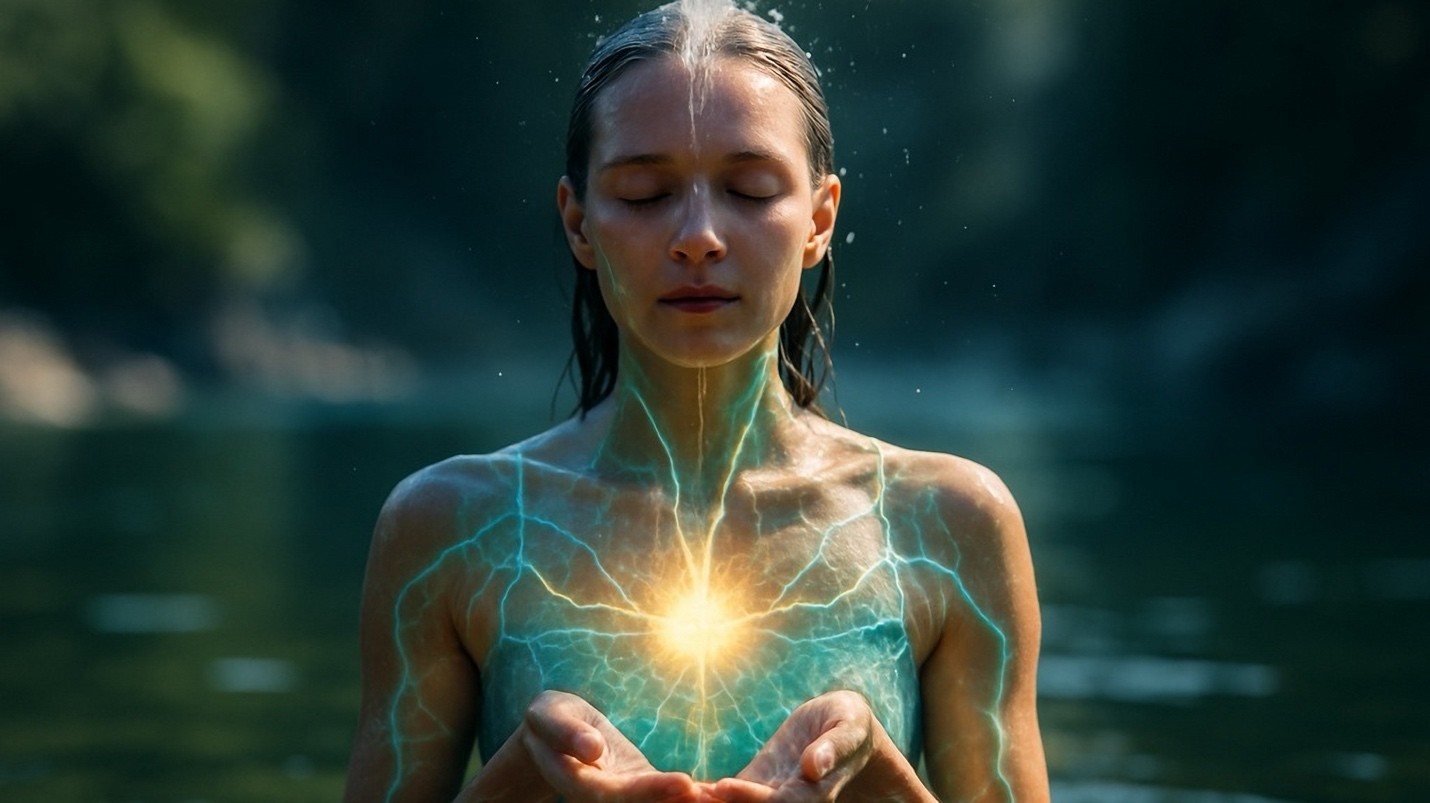
Central to Taoist philosophy is the concept of chi (also written as qi) — the vital life force that animates all living beings. Taoist practices, from acupuncture to tai chi to qigong, are fundamentally concerned with cultivating, circulating, and conserving this energy within the body. Health, in the Taoist view, is not merely the absence of illness — it is the free, abundant flow of chi through every system of the body. Blockages in this flow are understood to be the root of both physical disease and emotional suffering.
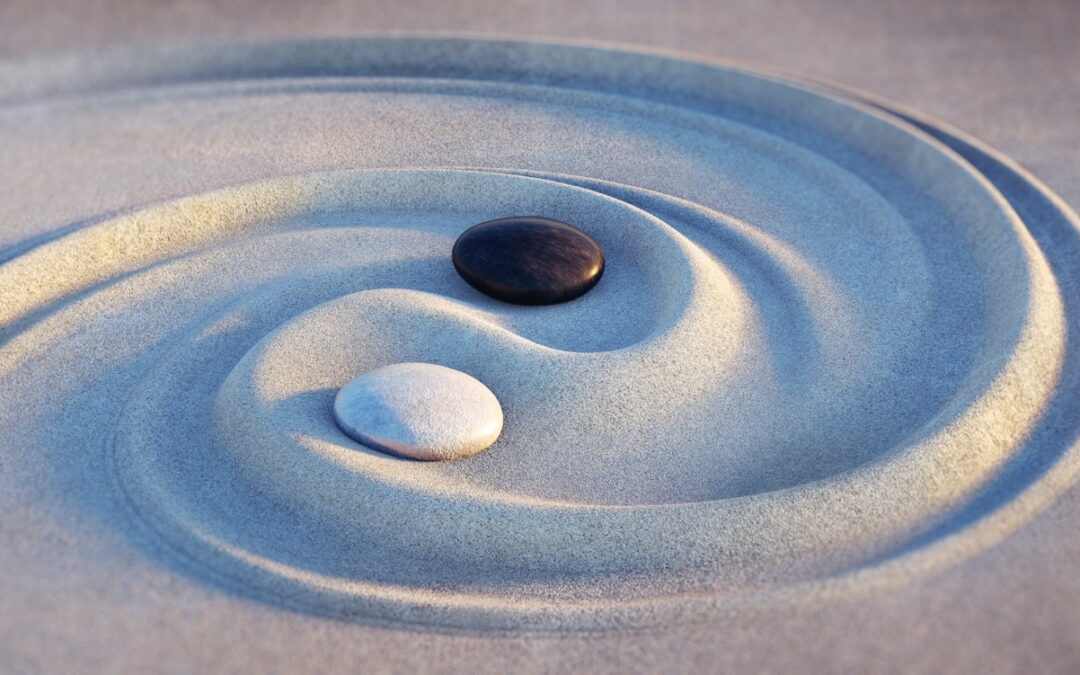
Equally central is the philosophy of yin and yang — the complementary, interdependent forces that together make up the whole of existence. Rather than seeing opposites as conflicting, Taoism understands them as dancing partners: masculine and feminine, active and receptive, expansion and contraction. This understanding forms the energetic foundation of Taoist Tantra, which works with the interplay of these polarities within the body and between partners.
Taoist sexuality — sometimes called Taoist sexual yoga or the Taoist bedroom arts — emerged from this understanding. Ancient Taoist masters recognized that sexual energy is among the most potent forms of chi available to humans, and they developed sophisticated practices for harnessing and circulating this energy for health, longevity, and spiritual development. These teachings were preserved in texts dating back over two thousand years and were practiced by both men and women seeking vitality and inner cultivation.
Taoist Tantra, as it is understood today, weaves these Taoist energy principles together with Tantric philosophy — creating a practice that honors the body as a sacred energetic system and sexual energy as a powerful force for healing and awakening.
How Taoist Tantra Differs from Neo-Tantra
While Neo-Tantra and Taoist Tantra share significant common ground — both treat the body as sacred, both work with sexual energy consciously, and both emphasize presence and connection — there are meaningful differences in their approach and emphasis.
Neo-Tantra draws primarily from the Indian Tantric tradition and tends to focus on the expansion of consciousness, emotional opening, and the dissolution of the separate self into union. It works heavily with the chakra system, kundalini energy, and the interplay of masculine and feminine polarities. It also integrates modern psychology and somatic therapy, making emotional healing and relational intimacy central to the practice.
Taoist Tantra, by contrast, is more rooted in the energetic and physiological. It works with the Taoist map of the body — the meridian system, the microcosmic orbit (a key energy circulation pathway), and the three treasures of jing (sexual essence), chi (vital energy), and shen (spiritual energy). The emphasis is on cultivating and conserving energy rather than releasing it, and on directing that energy upward through the body for health and spiritual refinement.
In practical terms, Neo-Tantra tends to be more emotionally expressive and relationally focused, while Taoist Tantra is often more inward, meditative, and concerned with the subtle body’s energetic architecture. Many practitioners find the two traditions beautifully complementary — and at Waves Tantra, we are integrating both practices into a unified approach, drawing the best of each tradition to offer a richer, more complete path for our clients.
Practices and Techniques
Taoist Tantra encompasses a rich range of practices, many of which can be explored individually or with a partner. What distinguishes these practices from conventional wellness techniques is their intentionality — each one is designed not just to relax the body or calm the mind, but to consciously work with energy as a living, directable force.
- The Microcosmic Orbit Meditation — a foundational Taoist practice in which awareness and breath are used to circulate energy up the spine and down the front of the body, nourishing every organ and energy center along the way. Regular practice of this meditation alone can produce profound shifts in vitality and inner calm.
- Qigong for sexual energy — specific movement and breathwork sequences designed to cultivate jing and move it through the body rather than dissipating it. These practices help build a reservoir of vital energy that supports health, creativity, and emotional resilience.
- Healing sounds — a Taoist practice using specific toned sounds to release stored emotions from the organs, creating space for fresh energy to flow. Each of the major organs is associated with a particular emotion and a corresponding sound, making this a surprisingly effective tool for emotional processing.
- Conscious lovemaking practices — techniques drawn from classical Taoist texts that emphasize slow, mindful intimacy, breath synchronization, and the exchange and cultivation of energy between partners. These practices shift the focus from outcome to presence, transforming physical intimacy into a genuine meditative experience.
- Inner alchemy (Nei Dan) — a more advanced meditative practice focused on transforming raw sexual energy into refined spiritual energy through sustained inner cultivation. This is the deepest level of Taoist Tantra, and it rewards consistent, patient practice.
These practices are not about performance or achievement. They are about developing a refined sensitivity to energy — learning to feel it, move it, and work with it intelligently.
Benefits for Wellness and Relationships
The benefits reported by those who engage with Taoist Tantra are wide-ranging and well-supported by both ancient wisdom and modern research into breathwork, somatic practices, and nervous system regulation.
Physical vitality: The Taoist tradition has long held that conscious management of sexual energy is one of the keys to longevity and robust health. Regular practice is associated with increased energy levels, hormonal balance, and a strengthened immune response.
Emotional wellbeing: The healing sounds and qigong practices work directly with the emotional body, helping to release chronic patterns of stress, grief, fear, and anger stored in the organs and tissues.
Deeper intimacy: For couples, Taoist Tantra offers a profoundly different experience of physical intimacy — one rooted in presence, energetic exchange, and mutual cultivation rather than performance. Many couples report a renewed sense of closeness and a deepened appreciation for one another.
Spiritual development: For those on a conscious path, Taoist Tantra offers a clear map for transforming the raw energy of the body into a vehicle for spiritual growth — integrating the physical and the transcendent rather than choosing between them.
Taoist Tantra is, at its essence, a science of energy — ancient, precise, and remarkably applicable to the challenges of modern life. Whether you come to it through curiosity about Taoism, a desire to deepen your Neo-Tantric practice, or simply a longing to feel more alive and connected in your body, it offers a rich and rewarding path.
It is also, importantly, a path that does not ask you to transcend your humanity. You do not need to become someone else, believe something new, or leave your ordinary life behind. The practice works with exactly what you already are — a living, breathing, feeling being, pulsing with energy that is waiting to be known more fully.
Many people who begin exploring Taoist Tantra describe a gradual but unmistakable shift: they sleep better, feel more grounded, experience less anxiety, and find their relationships — with themselves and with others — becoming richer and more satisfying. The changes are often subtle at first, and then, over time, undeniable.
The Tao does not force. It flows. And in learning to flow with the energy of your own body, you may find that everything else begins to move more naturally too.
Waves Tantra offers individual sessions and couples work exploring Neo-Tantra and Taoist principles in Marin County and the San Francisco Bay Area. Get in touch to learn more or book a session.
by Numan Shaikh | Mar 26, 2026 | Uncategorized
If you’ve heard the word “Tantra” and immediately pictured incense, exotic rituals, or something vaguely taboo — you’re not alone. Tantra is one of the most misunderstood spiritual traditions in the Western world. And Neo-Tantra, its modern evolution, is even more misunderstood. Filtered through decades of pop culture distortion and hushed whispers, the word has accumulated layers of myth that obscure something genuinely profound. So let’s clear the air, set the record straight, and explore why this practice is quietly transforming the lives of thousands of people seeking deeper connection, healing, and wholeness.
What Is Neo-Tantra?
Neo-Tantra is a contemporary approach to Tantric philosophy that adapts ancient teachings for the modern seeker. The word “Tantra” itself comes from Sanskrit and broadly means “to weave” or “to expand” — referring to the weaving together of body, mind, spirit, and energy into an integrated whole.
Classical Tantra emerged in India between the 5th and 9th centuries CE as a collection of spiritual texts and practices aimed at awakening consciousness and achieving liberation. It was a vast, complex system encompassing meditation, ritual, breathwork, mantra, and an understanding of the body as a sacred vehicle for spiritual realization. Far from being a fringe movement, it was studied by devoted scholars and practitioners across centuries and cultures.
Neo-Tantra, which developed primarily in the West during the 20th century — influenced by teachers such as Osho, Margot Anand, and others — distills these ancient teachings and blends them with modern psychology, somatic therapy, mindfulness practices, and conscious relating. It makes Tantra accessible — no Sanskrit required, no years of monastic study necessary. What it does require is a genuine willingness to show up, slow down, and pay attention.
How Neo-Tantra Differs from Classical Tantra
Classical Tantra was a highly structured, often secretive tradition passed from teacher to student over many years. It encompassed everything from temple worship to complex yogic practices, and sexuality — while present in some lineages — was just one small thread in a vast tapestry.
Neo-Tantra places a stronger emphasis on embodiment, intimacy, and the healing of our relationship with our own bodies and with others. Where classical Tantra might spend years on philosophy and ritual, Neo-Tantra tends to work more directly with:
- Breathwork to move energy through the body and release stored tension
- Somatic awareness — learning to feel and inhabit the body fully
- Sacred intimacy — exploring connection, presence, and vulnerability in relationships
- Conscious touch — using mindful, intentional touch as a pathway to healing and awakening
- Emotional release — creating safe space for feelings that have been long suppressed
It is worth noting that Neo-Tantra is not synonymous with sexuality. While some Neo-Tantric practices do address sexual energy and intimacy, the core of the work is about presence, aliveness, and authentic connection — with yourself and with others.
The Benefits of Neo-Tantra for Wellness and Relationships

The reason Neo-Tantra is gaining such traction in wellness circles is simple: it works in places where other modalities don’t quite reach.
For your body: Many of us carry decades of unexpressed emotion, trauma, and stress held in the tissues of the body. Neo-Tantra practices — particularly breathwork and somatic awareness — help unlock and release this stored material, leaving you feeling lighter, more energized, and more at home in your own skin. Over time, practitioners often report a marked reduction in chronic tension, improved sleep, and a heightened sense of physical vitality.
For your mind: By cultivating present-moment awareness through the body, Neo-Tantra acts as a powerful antidote to anxiety and overthinking. When you are fully in your body, the mental chatter naturally quiets. This is not suppression — it is redirection. Rather than trying to think your way out of stress, you breathe and feel your way through it, which is far more effective for the nervous system.
For your relationships: Neo-Tantra teaches the art of genuine presence — the ability to truly be with another person, without distraction or armor. This transforms the quality of all relationships, not just romantic ones. People report feeling more open, more communicative, and more deeply connected after beginning a Neo-Tantric practice. Couples in particular often find that it reopens channels of intimacy and understanding that had quietly closed over time.
For your sense of self: Perhaps most profoundly, Neo-Tantra helps you reconnect with your own aliveness — the felt sense that you are a living, breathing, feeling being, not just a mind on autopilot. This is, for many people, a revelation.
How to Get Started
You don’t need to travel to an ashram or commit to years of study to begin exploring Neo-Tantra. Here are a few accessible entry points:
- Start with the breath. A simple daily practice of slow, deep, conscious breathing for 10 minutes is genuinely Tantric. Notice where you hold tension. Breathe into it with curiosity rather than force.
- Try a guided session. Working with a trained Neo-Tantric practitioner — whether in a one-on-one session or a group workshop — offers a safe, held container to explore these practices in a meaningful way.
- Read and learn. Familiarizing yourself with the philosophy behind the practice helps you engage with it more fully. Authors like David Deida, Margot Anand, and Diana Richardson offer excellent introductions.
- Come as you are. Neo-Tantra does not require you to be more healed, more spiritual, or more open than you already are. The practice meets you exactly where you are.
Neo-Tantra is not a quick fix or a weekend trend. It is a living, evolving path of self-discovery — one that invites you to experience yourself and your relationships at a depth you may not have known was possible. Like any meaningful practice, it asks for patience and consistency. But the rewards — greater presence, deeper connection, a more embodied and fulfilling life — are well worth the investment.
Whether you come to Neo-Tantra through curiosity, through a desire to heal, or simply through a feeling that there must be more to life than the surface you’ve been living on, you are in good company. Many people who find this work describe it as the missing piece — the thing that finally made sense of everything else.
If you’re curious about what that might feel like, the door is open.
Waves Tantra offers Neo-Tantric sessions, couples work in Marin County and the San Francisco Bay Area Get in touch to learn more or book a session.

by Staff | Apr 14, 2025 | Uncategorized
Sacred Touch: Exploring the Healing Power of Lingam and Yoni Conscious touch
The contemporary world filled with stress and shame makes physical reconnection an essential self-care practice for restoring intimate experiences. The path to healing and embodiment starts through conscious sacred touch instead of mental processing for many people. Yoni Conscious touch and Lingam Conscious touch form the central practices of this transformative journey by providing deep healing benefits alongside emotional release and empowered sensuality.
Waves Tantra recommends these practices. They are not about performance or pressure. The primary focus of these practices is to provide healing, building trust and activating the body’s inherent wisdom.
We will examine the offerings of each sacred Conscious touch technique and discover how they can initiate personal transformation.
Yoni Conscious touch: Reclaiming Pleasure and Presence
The Sanskrit term “Yoni” translates to “sacred space” and describes the whole female genital area while honoring its spiritual importance in the feminine body. Through a tantric practice Yoni Conscious touch supports people in reconnecting with their physical selves as they heal from stored shame and trauma in their intimate regions.
Why Yoni Conscious touch Matters
A significant number of women possess hidden stress or unresolved memories in their pelvic regions. These issues might originate from previous relationships or cultural messages about sexuality and from spending years prioritizing the needs of others. Energetic and physical holding eventually leads to emotional disconnection and blocks both feeling suppression and pleasure sensation.
Yoni Conscious touch isn’t about stimulation—it’s about healing.
A body learns to relax through deliberate touch within a safe space. Emotional blocks may surface and be released. People experiencing numbness might notice sensations returning to their body. Everyone experiences the process individually while consent together with presence and care direct the experience.
What a Session Might Include
Breathwork and Grounding: The practice helps calm the nervous system and establish a grounded state of presence.
Body Mapping and Energy Reading: Gently exploring areas of tension or holding
External and Internal Yoni Conscious touch: This touch is performed with consent and dialogue at a slow pace and respectful manner for therapeutic benefits rather than erotic anticipation.
Emotional Integration: The space allows whatever emotions surface naturally such as tears, laughter, silence or words.
The practice enables individuals to transform their previous narratives by converting fear or disconnection into feelings of trust, sensitivity, and empowerment.
Lingam Conscious touch: Reframing Masculine Energy Through Sacred Touch
“Lingam” translates to “pillar of light” in Sanskrit and symbolizes male genitalia within sacred traditions. Lingam Conscious touch serves as a spiritual and emotional recalibration beyond its physical experience. Masculine energy practitioners use this approach to open up spaces for deep feeling and sensory connection while embracing their present moment and experiencing their sensuality without performance pressures.
Why Lingam Conscious touch Is Transformational
Traditional teachings for men often connect their value with performance standards and encourage them to look for immediate pleasure while discouraging them from showing vulnerability. The process of such conditioning leads to emotional isolation and tension while restricting one’s sensual experiences. The Lingam Conscious touch technique opens up a new path founded on the principles of slowness and surrender to achieve self-acceptance.
This practice allows clients to alleviate pelvic floor tension while activating energy movement through the spine and reestablishing physical and emotional sensitivity. Many clients report experiencing emotional release alongside clarity or profound inner peace throughout or following their sessions.
What a Session Might Include
Breath and Presence Techniques: Inviting relaxation and awareness
Conscious Touch Across the Body: Not limited to the Lingam—touch may include the thighs, lower back, and abdomen
Lingam Conscious touch: Performed with sensitivity and full consent, focused on connection rather than climax
Energetic and Emotional Release: Creating space for grief, joy, or insights to surface naturally
The goal is not orgasm—it is awakening, healing, and reclaiming the body as sacred.
Whether a session involves Yoni or Lingam Conscious touch, the foundation is always the same: safety, compassion, and consent. At Waves Tantra, nothing is done without clear agreement, and each session is customized to the client’s comfort level and boundaries.
Clients are never expected to “perform” or reach a certain result. The experience is entirely guided by what feels safe and nurturing in the moment. This approach allows deep trust to develop—not just with the practitioner, but with the self.
Addressing Common Concerns for Beginners
If you’re new to these practices, it’s completely normal to feel unsure or curious. You may wonder:
“What if I feel emotional during the session?” → That’s welcome. Emotions are part of the healing.
“Do I have to remove all my clothing?” → Only if and when you’re comfortable.
“Is this a sexual service?” → No. While the touch includes intimate areas, the intention is always therapeutic and sacred, not sexual gratification.
At Waves Tantra, you’ll never be rushed. You’ll never be judged. And you’ll never be expected to go further than you wish.
A Journey Toward Wholeness
Lingam and Yoni Conscious touch are not techniques. They are doorways back to the self. In a world that teaches us to disconnect, to harden, to suppress—Tantra invites us to remember.
- To remember that the body is not shameful, but sacred.
- That pleasure is not indulgent, but healing.
- That vulnerability is not weakness, but power.
And through conscious, respectful touch, individuals can begin to reinhabit their bodies with trust, love, and peace.
Ready to Experience Sacred Healing?
If you’re ready to explore Lingam or Yoni Conscious touch in a safe, nurturing space, Waves Tantra offers one-on-one sessions that honor your personal boundaries and emotional needs. Our practitioners are trained in trauma-informed care, somatic awareness, and tantric wisdom to support your unique healing journey.
Book your session today or contact us for a free 15-minute consultation to learn more.
Located in beautiful Sausalito in Marin, my studio is close to San Francisco, Palo Alto, Mill Valley, Tiburon, Sonoma and Napa County. We can also connect via Zoom if you live outside of the Bay Area.

by Numan Shaikh | Oct 23, 2024 | Uncategorized
Sexual dysfunction in men is a lot more common than most of us think. About 50 % of men aged 40 to 70 in the USA experience some form of this issue. Yet many men are not reaching out for help. Causes can be rooted in physical health issues, hormonal imbalances, medications, substance abuse, psychological or emotional (including anxiety, high levels of stress, depression and unresolved relationship issues) and lifestyle factors such as poor diet and lack of exercise. Help is available in all these different areas. In this article we explore a variety of solutions including Tantra.
Click here to read the full article
Situated in stunning Sausalito, my studio is within reach of San Francisco, Palo Alto, Mill Valley, Tiburon, and the wine country of Sonoma and Napa. Virtual sessions via Zoom are also available.

by Numan Shaikh | Oct 23, 2024 | Uncategorized
Tantra Massage has almost become a household name. But what exactly is it and is it for you? And how can it benefit you and your relationship?
Click here to read the full article and learn this simple yet very affective ‘Tantric Breath Exercise’
Conveniently located near San Francisco, Palo Alto, Mill Valley, Tiburon, Sonoma, and Napa County. For those outside the Bay Area, we can connect via Zoom.