
by Numan Shaikh | Oct 13, 2026 | Uncategorized
There is a conversation that most men never get to have — about the quiet, persistent pressure that follows them into the bedroom, into their relationships, and into the most intimate moments of their lives. It is a pressure so deeply woven into the fabric of male conditioning that many men don’t even recognize it as pressure. It simply feels like the way things are.
It is the pressure to perform.
To be ready. To last. To satisfy. To be enough. To get it right. To reach the destination — and to get there as efficiently as possible.
Tantra gently, profoundly, and sometimes surprisingly invites men out of this pressure and into something altogether more nourishing. Tantra does not take the freeway — perusing your ‘goal’ in the fastest and most focus direct way— but a leisurely, delightful stroll through the garden of your own body. Unhurried. Curious. Alive to every sensation along the way.
The Weight Men Carry
Performance pressure is arguably the deepest and most pervasive conditioning that men carry around their sexuality. From the earliest stirrings of sexual awareness, most men absorb a set of unspoken rules: an erection should appear on demand, it should last as long as required, and the encounter should culminate in a specific, predictable way. Anything less is failure.
These messages come from all around us — from locker room culture, from pornography, from the silence of fathers who never spoke about intimacy, from a society that equates masculine sexuality with power, potency, and control. They accumulate over years and decades, forming a layer of expectation so thick that genuine pleasure — spontaneous, embodied, present — can barely breathe beneath it.
The body, however, keeps the score. Performance pressure does not stay in the mind. It lands in the body — in the shoulders, in the jaw, in the belly, and very often in a subtle but chronic tension in the genitals themselves. This tension is so familiar that many men mistake it for arousal or excitement. It is not. It is vigilance. It is the body braced for evaluation, waiting to find out whether it will pass or fail.
This is a profound and unnecessary burden. And it is one that Tantra is uniquely equipped to dissolve.
The Tantra Invitation
Tantra does not approach male sexuality as a problem to be fixed or a performance to be optimized. It approaches it as an energy to be explored — with patience, with curiosity, and with a quality of presence that most men have never been taught to bring to their intimate lives.
At the heart of Tantric practice is a radical reorientation: from doing to being. From achieving to experiencing. From the destination to the journey itself.
In Tantra, there is no finish line. There is only this breath, this sensation, this moment of aliveness in the body. And when a man begins to settle into that orientation — really settle, not just intellectually understand it but feel it in his nervous system, in his muscles, in his skin — something remarkable begins to happen. The tension releases. The vigilance softens. The body, no longer on trial, begins to open.
And from that place of openness and relaxation, something that no amount of performance pressure can manufacture begins to arise naturally: genuine excitement. Genuine pleasure. Genuine connection.
Presence Over Performance
When a man operates from the belief that he must perform — that his worth in an intimate encounter is measured by his ability to satisfy, to last, to deliver — something essential is lost. True connection requires two people to actually be present with each other. But a man caught in performance mode is not present with his partner. He is present with his own internal evaluation system, monitoring, managing, correcting — fulfilling his programming rather than actually showing up.
His partner feels this, even if neither of them has words for it. There is a quality of absence in the midst of physical closeness. A sense of going through the motions rather than genuinely meeting.
Tantra addresses this at the root. By guiding a man back into his own body — through breath, through conscious awareness, through the slow and patient cultivation of sensation — it creates the conditions for something that performance can never produce: authentic presence. And authentic presence is the foundation upon which real intimacy is built.
When a man is truly present — relaxed in his body, aware of his energy, connected to his own sensation — he becomes available to his partner in a way that goes far beyond technique or stamina. He becomes genuinely *there*. And that quality of presence is, for most people, the most profoundly intimate and erotic thing a partner can offer.
What This Means in Practice
For men navigating specific challenges — whether that is erectile difficulty, premature ejaculation, low libido, or the natural shifts in sexual energy that come with age — the Tantric approach offers something that conventional solutions often miss entirely.
Medical interventions address the symptom. Tantra addresses the system.
By working with the breath to regulate the nervous system, by learning to move sexual energy through the body rather than localizing it in the genitals, and by cultivating a fundamentally different relationship with pleasure — one rooted in presence rather than performance — men consistently discover that their challenges begin to shift. Not because they have tried harder, but because they have finally stopped trying in the way that was never working.
Tantra teaches men that sexual energy is not a finite resource to be spent as quickly and directly as possible. It is a vast, circulating aliveness that, when worked with consciously, can nourish the whole body, deepen intimacy, and open doorways to states of pleasure and connection that performance-oriented sexuality cannot even imagine.
Erectile Dysfunction (ED) is one of the most common challenges men face — and one of the most loaded with shame. What most men are never told is that ED is very often rooted not in physiology but in the nervous system — in the chronic tension and performance anxiety that has become so habitual it is no longer even noticed. When a man learns to breathe deeply, to relax into sensation rather than chase it, and to release the grip of expectation, the nervous system begins to settle — and the body responds accordingly. Tantra does not promise a quick fix, but it offers something more valuable: a fundamentally different relationship with sexual energy that addresses the root rather than the symptom.
Premature Ejaculation (PE) is similarly entangled with performance pressure and nervous system activation. The body, braced and vigilant, moves quickly toward release as a kind of escape from the (perceived) unbearable intensity of the moment. Tantra works with this directly — teaching men to expand their capacity for sensation, to breathe through peaks of arousal rather than being overwhelmed by them, and to experience pleasure as something to inhabit rather than rush through. Men who engage with Tantric practice consistently report a natural and profound shift in their experience — not through suppression, but through expansion.
Low libido is another challenge that affects men across all ages — and particularly so as testosterone levels naturally shift with time. In Tantra, libido is understood not as a fixed quantity but as an energy that responds to attention, presence, and the quality of one’s relationship with the body. When the body is chronically tense, tired, or disconnected — as it so often is in modern life — desire retreats. Through breathwork, somatic awareness, and the conscious cultivation of sensual energy, many men find that desire does not disappear with age or stress — it simply needs a different kind of invitation.
Sexuality in senior men is perhaps the most underserved conversation of all. Our culture tends to treat male sexuality as something that peaks in youth and declines thereafter — a narrative that is both inaccurate and deeply dispiriting. Tantra offers a radically different perspective. As the urgency and reactivity of younger years naturally soften, something more refined becomes available — a slower, deeper, more whole-body experience of sensuality and intimacy that many older men describe as the most satisfying of their lives. The Tantric path does not mourn what has changed. It opens the door to what is now possible.
Coming Home to the Body
Perhaps the most profound gift that Tantra offers men is the simplest one: permission to be in their bodies without agenda.
Not to achieve anything. Not to prove anything. Not to deliver anything. Simply to breathe, to feel, to be present in the extraordinary landscape of their own physical existence — and to let whatever arises from that presence be exactly enough.
For many men, this is a genuinely new experience. And it tends to be, quietly and deeply, one of the most liberating things they have ever felt.
The garden of your own body is waiting. It has always been waiting. And it turns out — it is far more beautiful, far more expansive, and far more alive than the freeway ever allowed you to notice.
Waves Tantra offers individual sessions and couples work for men and couples in Marin County and the San Francisco Bay Area. If you feel called to explore this path, [reach out] — all enquiries are warmly and confidentially welcomed.
by Numan Shaikh | Sep 18, 2026 | Uncategorized
There is a story our culture tells about menopause, and it goes something like this: something ends, something is lost, and what remains is a diminished version of what came before. It is a story rooted in fear, in the worship of youth, and in a profound misunderstanding of what a woman’s body is capable of across the full arc of her life.
Tantra tells a different story. And so does Traditional Chinese Medicine, which has long referred to menopause not as a decline, but as the Second Spring — a time of renewed vitality, deepened wisdom, and the blossoming of a more authentic, liberated self. It is a threshold, not a closing door. And for many women who find their way to Tantric practice during this transition, it becomes one of the most rich and revelatory chapters of their sensual lives.
What Actually Happens to the Body
To truly embrace the Second Spring, it helps to understand what is actually happening physiologically — without shame, without alarm, and with genuine curiosity.
As estrogen and progesterone levels decline, the body undergoes a series of real and significant changes. Vaginal tissue may become drier and thinner, potentially making conventional intercourse uncomfortable without additional lubrication or care. Libido may shift — sometimes decreasing, sometimes simply changing in character, becoming less urgent and more depth-seeking. Sensitivity in the genitals may alter, and the pathway to arousal may take longer or require different kinds of stimulation than before.
Testosterone — often overlooked in conversations about women’s health — also declines during this period, and with it can come a reduction in sexual desire and overall vitality. Hot flashes, sleep disruption, and mood fluctuations add further complexity to an already significant transition.
And yet alongside all of this, something else is happening. The hormonal storms of the reproductive years are quieting. A new kind of clarity is emerging. Many women describe a growing sense of themselves — who they are, what they want, what they will no longer tolerate — that feels more honest and more powerful than anything they experienced in their younger years.
What Medicine Offers — and What Is Missing
Medical approaches to menopause, including Hormone Replacement Therapy (HRT) and various topical treatments, can be genuinely helpful and are absolutely worth exploring with a trusted healthcare provider. There is no conflict between good medical care and a Tantric approach to this transition — they can work beautifully hand in hand.
However, medicine addresses the physical symptoms of menopause. It does not address the deeper questions that this transition tends to raise: Who am I now, as a sensual being? What does pleasure mean to me at this stage of life? How do I reconnect with my body when it feels unfamiliar? How do I invite my partner into this new chapter with me?
These are not medical questions. They are questions of the soul, the body, and the erotic self. And this is precisely where Tantra offers something that conventional medicine cannot.
How Tantra Specifically Helps
Tantra approaches the body not as a problem to be fixed but as a sacred landscape to be explored — with patience, with curiosity, and with profound respect. This orientation is, for women navigating the changes of menopause, nothing short of transformative.
Breathwork is one of the most immediately powerful tools available. Deep, conscious breathing activates the parasympathetic nervous system, draws awareness into the body, and begins to move energy through areas that may feel numb, shut down, or disconnected. Many women are astonished to discover how much sensation becomes available simply through the breath — without any other intervention at all.
Somatic awareness practices help women rebuild a relationship with their changing bodies — learning to inhabit them with kindness rather than frustration, to notice what feels good rather than mourning what has changed. This shift in orientation, from resistance to curiosity, is at the heart of Tantric practice.
Conscious touch — both self-directed and shared with a partner — offers a pathway back to pleasure that is entirely independent of hormonal levels. Slow, mindful, intentional touch awakens the nervous system in ways that rushed or goal-oriented touch cannot. The whole body becomes available as a source of sensation and delight.
Energy orgasms — known in Tantra as full body orgasms — are perhaps the most significant gift this practice offers to women in their Second Spring. Unlike genitally-focused orgasms, energy orgasms move through the entire body as waves of sensation, pleasure, and aliveness. They do not depend on estrogen levels, on lubrication, or on any particular physical condition. They are available to any woman willing to learn to feel and move energy through her body — and for many post-menopausal women, they represent a quality of pleasure and expansion that surpasses anything they experienced in their younger years.
The Gift Nobody Talks About
Here is what the cultural narrative of loss almost always misses: menopause brings with it a set of freedoms that are genuinely extraordinary.
No more monthly cycles. No more pregnancy concerns. No more of the hormonal fluctuations that, for many women, created anxiety, self-doubt, and emotional turbulence for decades. And often, something even more significant — a growing unwillingness to perform, to please, to shrink. Many post-menopausal women describe a new relationship with their own desire: less apologetic, more honest, more directed by genuine pleasure and authentic connection than by obligation or habit.
In Tantric terms, this is the energy of the wise woman — the elder feminine archetype who has moved through the fires of experience and emerged clearer, freer, and more powerfully herself. This is not a diminishment. This is an arrival.
For Couples — Navigating This Transition Together
Menopause is not a solo journey for women in partnership. It affects both people, and how a couple navigates this transition together can either deepen their intimacy or create distance that is difficult to bridge.
The most important shift for couples is one of expectation and communication. Releasing the idea that intimacy must look the way it always has — and opening instead to discovery, experimentation, and genuine conversation about what
feels good now — creates the conditions for a new and often richer chapter of shared sensuality.
Tantric couples practices offer an invaluable framework for this exploration. Synchronized breathwork, conscious and unhurried touch, and the cultivation of presence over performance provide a safe and nourishing container in which both partners can relax, connect, and rediscover one another without pressure or agenda.
Many couples find, to their delight, that this slower, more conscious approach to intimacy — freed from the urgency and performance orientation of earlier years — becomes the most connected and satisfying lovemaking of their lives together.
Practical First Steps
If you feel called to explore Tantra as a companion for your Second Spring, here are some gentle entry points:
Begin with your breath. A daily practice of slow, deep, conscious breathing — even ten minutes each morning — begins to shift your relationship with your body in ways that accumulate powerfully over time.
Explore self-touch with intention. Set aside time to explore your body slowly and without agenda — not toward any particular outcome, but simply to discover what sensation is available to you now. Approach it as an act of self-loving curiosity.
Seek out a knowledgeable practitioner. Working with a Tantric practitioner experienced in women’s embodiment and post-menopausal sexuality provides a safe, informed, and deeply supportive space for this exploration.
Invite your partner into the conversation. Share what you are discovering, what you need, and what you are curious about. Vulnerability in intimacy is the doorway to genuine connection.
The Second Spring is not something that happens to you — it is something you can actively, consciously, and beautifully choose. It asks only that you bring curiosity where there has been resignation, tenderness where there has been frustration, and a willingness to discover that your body, at every age, holds more than you have yet imagined.
Tantra will meet you exactly where you are. And it will walk with you, gently and without judgment, into the fullness of everything that is still possible.
Your Second Spring is waiting.
Waves Tantra offers individual sessions and couples work in Marin County and the San Francisco Bay Area. If you are navigating menopause and would like to explore a Tantric approach to sensual healing and awakening, we warmly invite you to reach out.
by Numan Shaikh | Sep 18, 2026 | Uncategorized
If you have ever typed the words “tantric massage” into a search engine and felt confused — or even unsettled — by what came back, you are not alone. The internet has done a remarkable job of blurring the line between two very different things, and the result is a landscape that can feel difficult to navigate, particularly for those who are genuinely seeking healing, connection, and authentic Tantric work.
This blog exists to draw that line clearly, respectfully, and without judgment. Because the distinction matters — not just for the integrity of an ancient tradition, but for you, as someone seeking something real.
The Confusion Is Understandable — Here’s Why
Over the past few decades, the word “Tantra” has been co-opted by Western popular culture and commercialized to the point where it has become, in many contexts, almost synonymous with exotic or erotic services. A simple online search for “tantric massage” will return everything from genuine spiritual practitioners and somatic healers to thinly veiled adult entertainment services — all using the same language.
This is not an accident. The word “Tantric” lends an air of mystique, depth, and legitimacy that purely erotic services would not otherwise carry. And so it has been borrowed, stretched, and in many cases stripped entirely of its meaning.
The result is genuine confusion for sincere seekers — and real harm to people who could benefit enormously from authentic Tantric work but cannot find it through the noise. So let us clear the air.
What Erotic Massage Is
Erotic massage is exactly what it sounds like — a form of massage focused primarily on sexual arousal and physical pleasure. It is goal-oriented: the experience is directed toward a specific physical outcome, and the body is engaged primarily as a vehicle for that outcome.
This is said without judgment. Pleasure is not shameful, and the desire to be touched and to experience physical enjoyment is entirely human and natural. But erotic massage is not Tantra. It carries no philosophical foundation, no energetic intention, no healing framework, and no connection to the ancient wisdom tradition from which the word “Tantric” is borrowed. When it is marketed as such, it misleads the people who are searching for something deeper — and it does a profound disservice to a tradition that has offered genuine healing and awakening to countless people across thousands of years.
What Tantric Massage Actually Is
Authentic Tantric massage is something altogether different — and altogether more profound.
At its heart, Tantric massage is a healing and awakening practice rooted in Tantric philosophy, which understands the body as sacred, sexual energy as a powerful force for healing and spiritual growth, and touch as one of the most direct pathways to presence, aliveness, increased sensitivity, awareness, connection and wholeness.
The intention of a genuine Tantric massage session is not the pursuit of a specific physical outcome. It is the conscious movement of energy through the body — releasing what has been held, awakening what has been dormant, and guiding the recipient into a deeper, more alive relationship with themselves. The experience can be deeply relaxing, emotionally releasing, nourishing, blissful, spiritually expansive, and profoundly healing — often all at once.
Touch in a Tantric session is intentional, and deeply present. Every gesture carries awareness and direction. The whole body is worked with — not just the areas conventionally associated with sexuality — because in Tantra, the entire body is understood as a sensual and energetic landscape, alive with feeling and intelligence. Breath is woven throughout, as a tool for moving energy, deepening presence, and accessing states of awareness that ordinary touch cannot reach.
A genuine Tantric session is also held within a clear, professional, and sacred container. There is no ambiguity about its nature or its boundaries. The practitioner’s role is that of a guide and healer — holding space for your experience with skill, care, and complete integrity.
The Key Differences at a Glance
|
Tantric Massage |
Erotic Massage |
| Intention |
Healing, awakening, transformation |
Sexual arousal, pleasure and release |
| Focus |
Whole body and energy system |
Primarily erogenous zones |
| Outcome |
Open and non-goal oriented |
Goal oriented |
| Philosophy |
Rooted in ancient Tantric tradition |
No philosophical foundation |
| Professional container |
Clear, sacred, unambiguous |
Variable, often ambiguous |
| Breathwork |
Central to the practice |
Absent |
| Emotional dimension |
Welcomed, held, and supported |
Not addressed |
| Healing intention |
Primary |
Absent |
Why This Distinction Matters
The blurring of these two things causes real harm — in several directions at once.
For the person seeking genuine healing, the confusion can lead them to the wrong door entirely — leaving them disappointed, uncomfortable, or even retraumatized when what they found bore no resemblance to what they were looking for.
For the person who might genuinely benefit from authentic Tantric work — someone healing from sexual trauma, navigating the changes of menopause or post-cancer treatment, seeking to reconnect with their body after years of disconnection, or simply longing for a deeper experience of themselves — the noise around “tantric massage” can make the genuine thing feel inaccessible or even shameful to pursue.
And for the tradition itself, the commercialization of Tantra strips it of the depth, reverence, and wisdom it deserves. Tantra is a sophisticated, ancient, and enormously valuable system of healing and awakening. It deserves to be represented accurately — and those who seek it deserve to find the real thing.
What to Look for in a Genuine Tantric Practitioner
If you are navigating this landscape and trying to find authentic Tantric work, here are some clear markers to look for:
Transparency about training and lineage. A genuine practitioner will be open about their background, their teachers, and the tradition or traditions they work within.
A clear intake process. Before any session, a reputable practitioner will have a conversation with you about your intentions, your history, your boundaries, and what to expect. This is not optional — it is essential.
No ambiguity. The nature and boundaries of the session should be completely clear from the outset. If anything feels murky or pressured, trust that instinct and walk away.
A healing and growth orientation. The focus of the session should be entirely on your wellbeing, your healing, and
your growth — not on providing a commercial service or meeting a predetermined outcome.
A credible, professional presence. Look for a thoughtful website, genuine testimonials, and a practitioner who communicates with clarity, warmth, and professionalism.
What to Expect at Waves Tantra
At Waves Tantra, every session is held within a sacred, professional, and completely unambiguous container. Whether you come as an individual seeking to reconnect with your own sensual energy, or as a couple wishing to deepen your intimacy and connection, you will be met with warmth, skill, and absolute integrity.
Sessions weave together conscious touch, breathwork, energy work, and somatic awareness in a way that is tailored entirely to your needs and intentions. The goal is never a specific physical outcome — it is your healing, your awakening, and your deepening relationship with the extraordinary landscape of your own body.
There is no such thing as a question too basic or too sensitive to ask. If you are curious, uncertain, or simply want to understand more before taking a step, I warmly invite you to reach out. The conversation itself is part of the process.
Authentic Tantric work exists. It is profound, it is healing, and it is absolutely worth finding. You deserve nothing less than the real thing.
Waves Tantra offers individual sessions and couples work in Marin County and the San Francisco Bay Area. Reach out to learn more or to book a session — all enquiries are warmly welcomed.

by Numan Shaikh | Apr 27, 2026 | Uncategorized
A prostate cancer diagnosis changes everything. The weeks and months that follow — the consultations, the decisions, the treatment — demand so much of a man’s attention and energy that there is little room for anything else. Survival becomes the focus, as it should be. But once treatment ends and life begins to settle, many men find themselves facing a new and unexpected challenge: the profound changes that prostate cancer treatment has made to their sexuality, their sense of self, and their intimate relationships.
This is a conversation that doesn’t happen nearly enough. And it is one that Tantra is uniquely positioned to help with.
What Doctors Don’t Always Tell You
Here is something that surprises many men and their partners: the sexual side effects of prostate cancer treatment are often significant, long-lasting, and deeply impactful — and yet they are not always discussed with the clarity and compassion they deserve before treatment begins.
Surgery, radiation, and hormone therapy can each affect sexual function in different ways. But in the urgency of treating cancer, the focus is understandably on survival. Sexual wellbeing can feel like a secondary concern — both to the medical team and to the patient himself. Many men emerge from treatment unprepared for what they will experience in their bodies, and without a clear roadmap for what comes next.
This is not a criticism of the medical profession, which saves lives every day. It is simply an acknowledgment that conventional medicine, for all its extraordinary skill, does not always have the tools to address the full spectrum of a man’s healing — particularly when it comes to sexuality, intimacy, and embodied wellbeing. That is where complementary approaches like Tantra can play a profound and genuinely transformative role.
The Physical Realities of Treatment
The physical effects of prostate cancer treatment on sexual function are well documented, though they vary depending on the type of treatment received.
Erectile dysfunction (ED) is one of the most common side effects of both surgery and radiation. When the prostate is removed, the nerves responsible for erection can be damaged or severed, even with nerve-sparing techniques. For many men, the ability to achieve or maintain an erection is significantly altered — sometimes temporarily, sometimes permanently.
Loss of libido is particularly associated with hormone therapy (androgen deprivation therapy), which reduces testosterone to very low levels. This can result in a dramatic decrease in sexual desire, as well as fatigue, mood changes, and a general sense of disconnection from the body.
Dry orgasm — the absence of ejaculation following prostatectomy — is another change that many men are not fully prepared for. While orgasm itself may still be possible, the absence of ejaculation can feel disorienting and can alter a man’s relationship with his own pleasure in unexpected ways.
Nerve damage and altered sensation can change the way the genitals and surrounding areas feel, sometimes reducing sensitivity, sometimes creating new and unfamiliar sensations that take time to understand and integrate.
These are significant changes. They deserve to be met with honesty, compassion, and a genuine commitment to finding new pathways to pleasure and connection.
The Emotional and Psychological Impact
The physical changes of prostate cancer treatment do not occur in isolation. They arrive accompanied by a complex emotional landscape that many men find difficult to navigate — particularly in a culture that does not always make space for men to process vulnerability and loss.
Feelings of grief are common — grief for the body that existed before treatment, for a sexuality that felt familiar and reliable. Shame can arise, fed by cultural messages that tie masculine identity to sexual performance and potency. Anxiety about intimacy — about being unable to satisfy a partner, about being seen in vulnerability — can lead men to withdraw from closeness at precisely the moment they most need connection.
Depression is not uncommon in the aftermath of prostate cancer treatment, and it is often underreported. The intersection of physical change, hormonal shifts, and emotional adjustment can be genuinely overwhelming. Partners, too, carry their own emotional weight — having witnessed their loved one’s illness and treatment, they may be uncertain how to approach intimacy again, afraid of causing pain or pressure.
All of this is entirely understandable. And all of it can be worked with, gently and effectively, through the practices that Tantra offers.
How Tantra Helps
Tantra approaches sexuality not as a performance to be achieved but as an energy to be explored. This distinction is, for men navigating post-treatment changes, nothing short of liberating.
Where conventional approaches to sexual rehabilitation focus primarily on restoring erectile function — through medication, devices, or surgery — Tantra opens an entirely different conversation. It invites a man to become curious about his body as it is now, rather than measuring it against how it used to be. It teaches that pleasure, connection, and deep sexual experience are not dependent on erection or ejaculation. They are available through breath, through touch, through presence, through the conscious movement of energy through the body.
Breathwork is a cornerstone of Tantric practice and one of the most immediately accessible tools for post-treatment healing. Conscious, deep breathing activates the parasympathetic nervous system — shifting the body out of stress and into a state of openness and receptivity. It also begins to move energy through areas of the body that may feel numb, disconnected, or shut down following treatment.
Somatic awareness practices help men re-establish a relationship with their bodies — learning to feel sensation without judgment, to notice pleasure in new places and new forms, and to gradually rebuild a sense of embodied confidence and ease.
Energy work and chakra practices address the energetic dimensions of healing — working with the body’s subtle energy system to restore flow, release stored trauma, and reawaken the life force that treatment may have temporarily suppressed.
Conscious touch — both self-directed and shared with a partner — offers a pathway back to intimacy that is unhurried, exploratory, and completely free of performance pressure.
A Blessing in Disguise — Discovering Energy Orgasms
Here is something remarkable that many men discover on the other side of prostate cancer treatment — something that their doctors almost certainly did not mention: the possibility of a completely new and often more expansive experience of orgasm.
In Tantra, we speak of energy orgasms — sometimes called full body orgasms — as distinct from the genitally-focused, ejaculatory orgasms that most men have experienced throughout their lives. Energy orgasms are not localized. They move through the entire body in waves of sensation, pleasure, and aliveness that can be profoundly deep and deeply satisfying — and they do not require erection or ejaculation to occur.
Many men who come to Tantra following prostate cancer treatment discover, often to their considerable surprise, that this new chapter of their sexuality is not a diminishment but a revelation. Freed from the familiar template of sexual experience, they find themselves open to something richer, more whole-body, and more profoundly connected than what came before. What initially felt like loss becomes, through the lens of Tantra, an unexpected doorway.
This is not to minimize the very real challenges of post-treatment recovery. It is simply to say that the story does not end with treatment. In many ways, for the men who are willing to explore, it is just beginning.
Advice for Couples
Prostate cancer and its aftermath are not a solo journey — they affect both partners deeply. For couples navigating this territory together, Tantra offers invaluable guidance.
The most important shift is one of expectation: releasing the idea that intimacy must look a certain way and opening instead to discovery. Couples who approach this chapter with curiosity rather than pressure — who are willing to slow down, communicate openly, and explore new forms of touch and connection — often find that their intimacy deepens in ways they did not anticipate.
Tantric couples practices — including synchronized breathwork, conscious touch, and sensate focus exercises — provide a structured, safe container for this exploration. They remove performance from the equation entirely and replace it with presence, which is ultimately what intimacy is made of.
Practical First Steps
If you are a prostate cancer survivor — or a partner of one — and you feel called to explore this path, here is how to begin:
Start with breath. A daily practice of slow, conscious breathing for even ten minutes begins to shift the nervous system, move energy, and reconnect you with your body in a gentle, accessible way.
Seek out a knowledgeable practitioner. Working with a Tantric practitioner who has experience with sexual healing and post-treatment recovery provides a safe, informed, and deeply supportive container for this work.
Go slowly and be patient. Healing after Prostate surgery takes time and healing is not linear. There will be days of openness and days of resistance. Both are part of the process.
Include your partner. If you are in a relationship, invite your partner into the conversation and, when the time feels right, into the practice. Healing together can be one of the most bonding experiences a couple shares.
A new beginning is exactly what it sounds like — not a return to what was, but the start of something new. For many men, that something new turns out to be the most authentic, embodied, and fulfilling chapter of their sexual lives.
Tantra will meet you exactly where you are. And it will walk with you, gently and without judgment, toward everything that is still possible.
Waves Tantra offers individual sessions and couples work in Marin County and the San Francisco Bay Area. If you or your partner are navigating life after prostate cancer treatment and would like to explore a Tantric approach to healing, we warmly invite you to reach out.
by Numan Shaikh | Mar 30, 2026 | Uncategorized
In the world of sacred sexuality and embodied spirituality, two traditions have quietly shaped much of what we now understand about energy, pleasure, and conscious living: Tantra and Taoism. Separately, each is a profound system of wisdom stretching back thousands of years. Together, they form a potent and complementary path known as Taoist Tantra — a practice that is drawing increasing interest from those seeking a deeper, more integrated approach to health, intimacy, and self-awareness.
For many people, the journey toward this practice begins with a nagging sense that something is missing — that despite all their efforts to be healthy, connected, and present, there is an aliveness just beneath the surface that they haven’t quite been able to reach. Taoist Tantra offers a map to exactly that place.
But what exactly is Taoist Tantra? Where does it come from, how does it differ from Neo-Tantra, and what might it offer you? Let’s explore.
Origins and Philosophy
Taoism is one of China’s oldest philosophical and spiritual traditions, rooted in the teachings of Lao Tzu and codified in the ancient text known as the Tao Te Ching, written around the 4th century BCE. At its heart, Taoism is concerned with living in harmony with the Tao — loosely translated as “the Way” — the fundamental, undivided flow of the universe from which all things arise and to which all things return. It is a philosophy not of striving, but of attunement — of learning to move with the natural rhythms of life rather than against them.
Central to Taoist philosophy is the concept of chi (also written as qi) — the vital life force that animates all living beings. Taoist practices, from acupuncture to tai chi to qigong, are fundamentally concerned with cultivating, circulating, and conserving this energy within the body. Health, in the Taoist view, is not merely the absence of illness — it is the free, abundant flow of chi through every system of the body. Blockages in this flow are understood to be the root of both physical disease and emotional suffering.
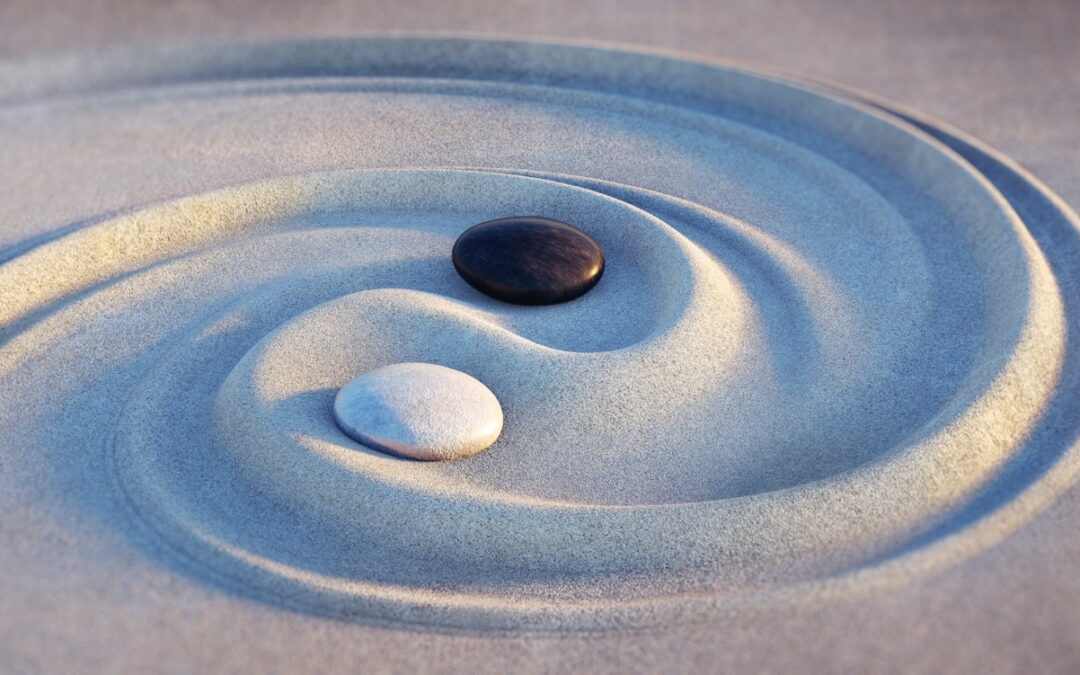
Equally central is the philosophy of yin and yang — the complementary, interdependent forces that together make up the whole of existence. Rather than seeing opposites as conflicting, Taoism understands them as dancing partners: masculine and feminine, active and receptive, expansion and contraction. This understanding forms the energetic foundation of Taoist Tantra, which works with the interplay of these polarities within the body and between partners.
Taoist sexuality — sometimes called Taoist sexual yoga or the Taoist bedroom arts — emerged from this understanding. Ancient Taoist masters recognized that sexual energy is among the most potent forms of chi available to humans, and they developed sophisticated practices for harnessing and circulating this energy for health, longevity, and spiritual development. These teachings were preserved in texts dating back over two thousand years and were practiced by both men and women seeking vitality and inner cultivation.
Taoist Tantra, as it is understood today, weaves these Taoist energy principles together with Tantric philosophy — creating a practice that honors the body as a sacred energetic system and sexual energy as a powerful force for healing and awakening.
How Taoist Tantra Differs from Neo-Tantra
While Neo-Tantra and Taoist Tantra share significant common ground — both treat the body as sacred, both work with sexual energy consciously, and both emphasize presence and connection — there are meaningful differences in their approach and emphasis.
Neo-Tantra draws primarily from the Indian Tantric tradition and tends to focus on the expansion of consciousness, emotional opening, and the dissolution of the separate self into union. It works heavily with the chakra system, kundalini energy, and the interplay of masculine and feminine polarities. It also integrates modern psychology and somatic therapy, making emotional healing and relational intimacy central to the practice.
Taoist Tantra, by contrast, is more rooted in the energetic and physiological. It works with the Taoist map of the body — the meridian system, the microcosmic orbit (a key energy circulation pathway), and the three treasures of jing (sexual essence), chi (vital energy), and shen (spiritual energy). The emphasis is on cultivating and conserving energy rather than releasing it, and on directing that energy upward through the body for health and spiritual refinement.
In practical terms, Neo-Tantra tends to be more emotionally expressive and relationally focused, while Taoist Tantra is often more inward, meditative, and concerned with the subtle body’s energetic architecture. Many practitioners find the two traditions beautifully complementary — and at Waves Tantra, we are integrating both practices into a unified approach, drawing the best of each tradition to offer a richer, more complete path for our clients.
Practices and Techniques
Taoist Tantra encompasses a rich range of practices, many of which can be explored individually or with a partner. What distinguishes these practices from conventional wellness techniques is their intentionality — each one is designed not just to relax the body or calm the mind, but to consciously work with energy as a living, directable force.
- The Microcosmic Orbit Meditation — a foundational Taoist practice in which awareness and breath are used to circulate energy up the spine and down the front of the body, nourishing every organ and energy center along the way. Regular practice of this meditation alone can produce profound shifts in vitality and inner calm.
- Qigong for sexual energy — specific movement and breathwork sequences designed to cultivate jing and move it through the body rather than dissipating it. These practices help build a reservoir of vital energy that supports health, creativity, and emotional resilience.
- Healing sounds — a Taoist practice using specific toned sounds to release stored emotions from the organs, creating space for fresh energy to flow. Each of the major organs is associated with a particular emotion and a corresponding sound, making this a surprisingly effective tool for emotional processing.
- Conscious lovemaking practices — techniques drawn from classical Taoist texts that emphasize slow, mindful intimacy, breath synchronization, and the exchange and cultivation of energy between partners. These practices shift the focus from outcome to presence, transforming physical intimacy into a genuine meditative experience.
- Inner alchemy (Nei Dan) — a more advanced meditative practice focused on transforming raw sexual energy into refined spiritual energy through sustained inner cultivation. This is the deepest level of Taoist Tantra, and it rewards consistent, patient practice.
These practices are not about performance or achievement. They are about developing a refined sensitivity to energy — learning to feel it, move it, and work with it intelligently.
Benefits for Wellness and Relationships
The benefits reported by those who engage with Taoist Tantra are wide-ranging and well-supported by both ancient wisdom and modern research into breathwork, somatic practices, and nervous system regulation.
Physical vitality: The Taoist tradition has long held that conscious management of sexual energy is one of the keys to longevity and robust health. Regular practice is associated with increased energy levels, hormonal balance, and a strengthened immune response.
Emotional wellbeing: The healing sounds and qigong practices work directly with the emotional body, helping to release chronic patterns of stress, grief, fear, and anger stored in the organs and tissues.
Deeper intimacy: For couples, Taoist Tantra offers a profoundly different experience of physical intimacy — one rooted in presence, energetic exchange, and mutual cultivation rather than performance. Many couples report a renewed sense of closeness and a deepened appreciation for one another.
Spiritual development: For those on a conscious path, Taoist Tantra offers a clear map for transforming the raw energy of the body into a vehicle for spiritual growth — integrating the physical and the transcendent rather than choosing between them.
Taoist Tantra is, at its essence, a science of energy — ancient, precise, and remarkably applicable to the challenges of modern life. Whether you come to it through curiosity about Taoism, a desire to deepen your Neo-Tantric practice, or simply a longing to feel more alive and connected in your body, it offers a rich and rewarding path.
It is also, importantly, a path that does not ask you to transcend your humanity. You do not need to become someone else, believe something new, or leave your ordinary life behind. The practice works with exactly what you already are — a living, breathing, feeling being, pulsing with energy that is waiting to be known more fully.
Many people who begin exploring Taoist Tantra describe a gradual but unmistakable shift: they sleep better, feel more grounded, experience less anxiety, and find their relationships — with themselves and with others — becoming richer and more satisfying. The changes are often subtle at first, and then, over time, undeniable.
The Tao does not force. It flows. And in learning to flow with the energy of your own body, you may find that everything else begins to move more naturally too.
Waves Tantra offers individual sessions and couples work exploring Neo-Tantra and Taoist principles in Marin County and the San Francisco Bay Area. Get in touch to learn more or book a session.
by Numan Shaikh | Mar 26, 2026 | Uncategorized
If you’ve heard the word “Tantra” and immediately pictured incense, exotic rituals, or something vaguely taboo — you’re not alone. Tantra is one of the most misunderstood spiritual traditions in the Western world. And Neo-Tantra, its modern evolution, is even more misunderstood. Filtered through decades of pop culture distortion and hushed whispers, the word has accumulated layers of myth that obscure something genuinely profound. So let’s clear the air, set the record straight, and explore why this practice is quietly transforming the lives of thousands of people seeking deeper connection, healing, and wholeness.
What Is Neo-Tantra?
Neo-Tantra is a contemporary approach to Tantric philosophy that adapts ancient teachings for the modern seeker. The word “Tantra” itself comes from Sanskrit and broadly means “to weave” or “to expand” — referring to the weaving together of body, mind, spirit, and energy into an integrated whole.
Classical Tantra emerged in India between the 5th and 9th centuries CE as a collection of spiritual texts and practices aimed at awakening consciousness and achieving liberation. It was a vast, complex system encompassing meditation, ritual, breathwork, mantra, and an understanding of the body as a sacred vehicle for spiritual realization. Far from being a fringe movement, it was studied by devoted scholars and practitioners across centuries and cultures.
Neo-Tantra, which developed primarily in the West during the 20th century — influenced by teachers such as Osho, Margot Anand, and others — distills these ancient teachings and blends them with modern psychology, somatic therapy, mindfulness practices, and conscious relating. It makes Tantra accessible — no Sanskrit required, no years of monastic study necessary. What it does require is a genuine willingness to show up, slow down, and pay attention.
How Neo-Tantra Differs from Classical Tantra
Classical Tantra was a highly structured, often secretive tradition passed from teacher to student over many years. It encompassed everything from temple worship to complex yogic practices, and sexuality — while present in some lineages — was just one small thread in a vast tapestry.
Neo-Tantra places a stronger emphasis on embodiment, intimacy, and the healing of our relationship with our own bodies and with others. Where classical Tantra might spend years on philosophy and ritual, Neo-Tantra tends to work more directly with:
- Breathwork to move energy through the body and release stored tension
- Somatic awareness — learning to feel and inhabit the body fully
- Sacred intimacy — exploring connection, presence, and vulnerability in relationships
- Conscious touch — using mindful, intentional touch as a pathway to healing and awakening
- Emotional release — creating safe space for feelings that have been long suppressed
It is worth noting that Neo-Tantra is not synonymous with sexuality. While some Neo-Tantric practices do address sexual energy and intimacy, the core of the work is about presence, aliveness, and authentic connection — with yourself and with others.
The Benefits of Neo-Tantra for Wellness and Relationships

The reason Neo-Tantra is gaining such traction in wellness circles is simple: it works in places where other modalities don’t quite reach.
For your body: Many of us carry decades of unexpressed emotion, trauma, and stress held in the tissues of the body. Neo-Tantra practices — particularly breathwork and somatic awareness — help unlock and release this stored material, leaving you feeling lighter, more energized, and more at home in your own skin. Over time, practitioners often report a marked reduction in chronic tension, improved sleep, and a heightened sense of physical vitality.
For your mind: By cultivating present-moment awareness through the body, Neo-Tantra acts as a powerful antidote to anxiety and overthinking. When you are fully in your body, the mental chatter naturally quiets. This is not suppression — it is redirection. Rather than trying to think your way out of stress, you breathe and feel your way through it, which is far more effective for the nervous system.
For your relationships: Neo-Tantra teaches the art of genuine presence — the ability to truly be with another person, without distraction or armor. This transforms the quality of all relationships, not just romantic ones. People report feeling more open, more communicative, and more deeply connected after beginning a Neo-Tantric practice. Couples in particular often find that it reopens channels of intimacy and understanding that had quietly closed over time.
For your sense of self: Perhaps most profoundly, Neo-Tantra helps you reconnect with your own aliveness — the felt sense that you are a living, breathing, feeling being, not just a mind on autopilot. This is, for many people, a revelation.
How to Get Started
You don’t need to travel to an ashram or commit to years of study to begin exploring Neo-Tantra. Here are a few accessible entry points:
- Start with the breath. A simple daily practice of slow, deep, conscious breathing for 10 minutes is genuinely Tantric. Notice where you hold tension. Breathe into it with curiosity rather than force.
- Try a guided session. Working with a trained Neo-Tantric practitioner — whether in a one-on-one session or a group workshop — offers a safe, held container to explore these practices in a meaningful way.
- Read and learn. Familiarizing yourself with the philosophy behind the practice helps you engage with it more fully. Authors like David Deida, Margot Anand, and Diana Richardson offer excellent introductions.
- Come as you are. Neo-Tantra does not require you to be more healed, more spiritual, or more open than you already are. The practice meets you exactly where you are.
Neo-Tantra is not a quick fix or a weekend trend. It is a living, evolving path of self-discovery — one that invites you to experience yourself and your relationships at a depth you may not have known was possible. Like any meaningful practice, it asks for patience and consistency. But the rewards — greater presence, deeper connection, a more embodied and fulfilling life — are well worth the investment.
Whether you come to Neo-Tantra through curiosity, through a desire to heal, or simply through a feeling that there must be more to life than the surface you’ve been living on, you are in good company. Many people who find this work describe it as the missing piece — the thing that finally made sense of everything else.
If you’re curious about what that might feel like, the door is open.
Waves Tantra offers Neo-Tantric sessions, couples work in Marin County and the San Francisco Bay Area Get in touch to learn more or book a session.