
In the world of sacred sexuality and embodied spirituality, two traditions have quietly shaped much of what we now understand about energy, pleasure, and conscious living: Tantra and Taoism. Separately, each is a profound system of wisdom stretching back thousands of years. Together, they form a potent and complementary path known as Taoist Tantra — a practice that is drawing increasing interest from those seeking a deeper, more integrated approach to health, intimacy, and self-awareness.
For many people, the journey toward this practice begins with a nagging sense that something is missing — that despite all their efforts to be healthy, connected, and present, there is an aliveness just beneath the surface that they haven’t quite been able to reach. Taoist Tantra offers a map to exactly that place.
But what exactly is Taoist Tantra? Where does it come from, how does it differ from Neo-Tantra, and what might it offer you? Let’s explore.
Origins and Philosophy
Taoism is one of China’s oldest philosophical and spiritual traditions, rooted in the teachings of Lao Tzu and codified in the ancient text known as the Tao Te Ching, written around the 4th century BCE. At its heart, Taoism is concerned with living in harmony with the Tao — loosely translated as “the Way” — the fundamental, undivided flow of the universe from which all things arise and to which all things return. It is a philosophy not of striving, but of attunement — of learning to move with the natural rhythms of life rather than against them.
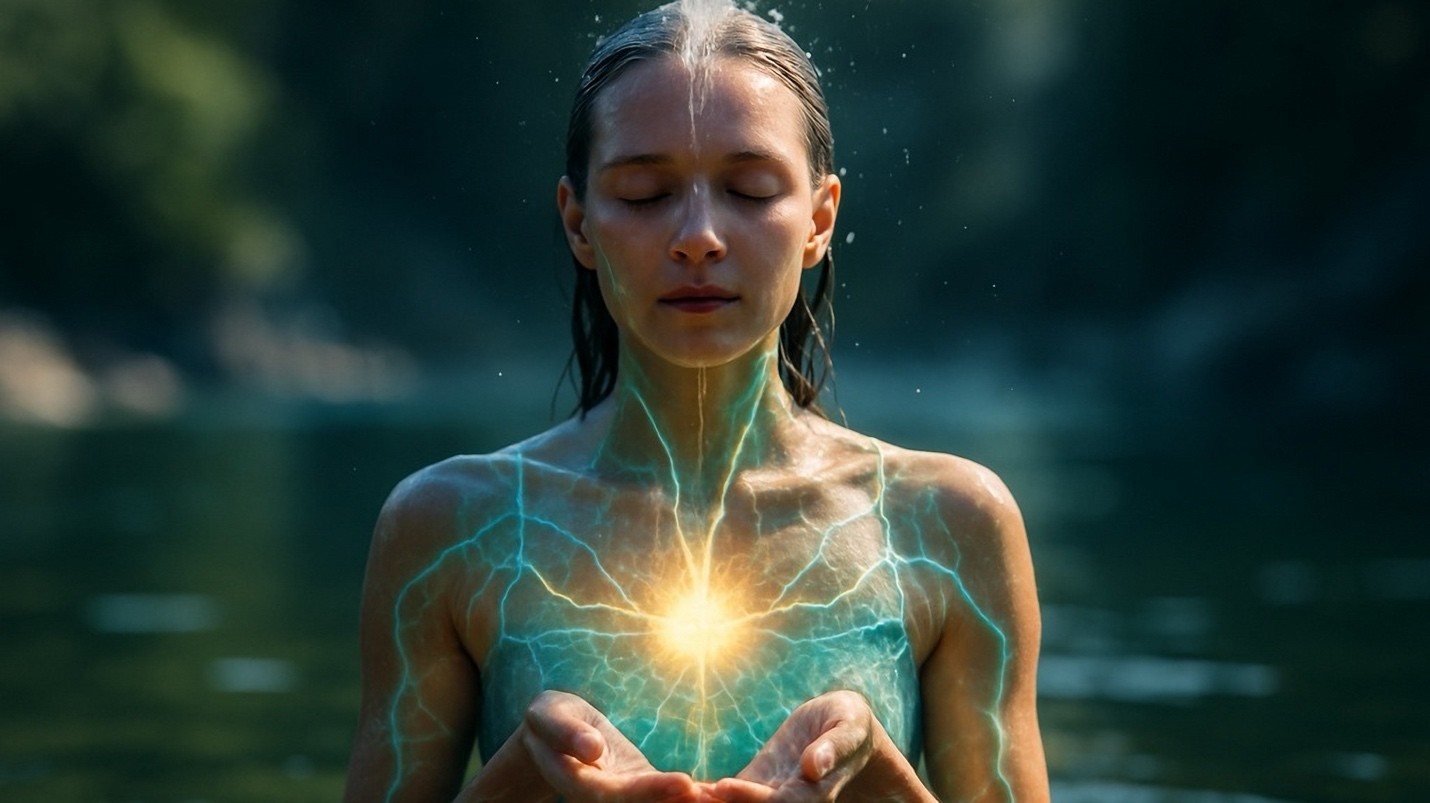
Central to Taoist philosophy is the concept of chi (also written as qi) — the vital life force that animates all living beings. Taoist practices, from acupuncture to tai chi to qigong, are fundamentally concerned with cultivating, circulating, and conserving this energy within the body. Health, in the Taoist view, is not merely the absence of illness — it is the free, abundant flow of chi through every system of the body. Blockages in this flow are understood to be the root of both physical disease and emotional suffering.
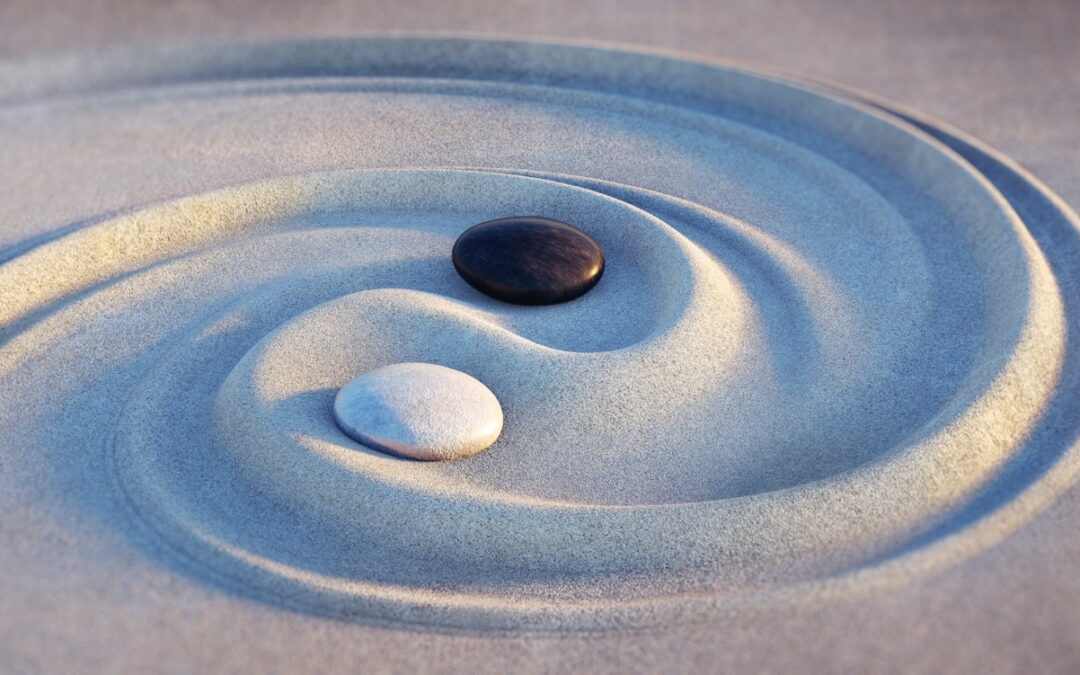
Equally central is the philosophy of yin and yang — the complementary, interdependent forces that together make up the whole of existence. Rather than seeing opposites as conflicting, Taoism understands them as dancing partners: masculine and feminine, active and receptive, expansion and contraction. This understanding forms the energetic foundation of Taoist Tantra, which works with the interplay of these polarities within the body and between partners.
Taoist sexuality — sometimes called Taoist sexual yoga or the Taoist bedroom arts — emerged from this understanding. Ancient Taoist masters recognized that sexual energy is among the most potent forms of chi available to humans, and they developed sophisticated practices for harnessing and circulating this energy for health, longevity, and spiritual development. These teachings were preserved in texts dating back over two thousand years and were practiced by both men and women seeking vitality and inner cultivation.
Taoist Tantra, as it is understood today, weaves these Taoist energy principles together with Tantric philosophy — creating a practice that honors the body as a sacred energetic system and sexual energy as a powerful force for healing and awakening.
How Taoist Tantra Differs from Neo-Tantra
While Neo-Tantra and Taoist Tantra share significant common ground — both treat the body as sacred, both work with sexual energy consciously, and both emphasize presence and connection — there are meaningful differences in their approach and emphasis.
Neo-Tantra draws primarily from the Indian Tantric tradition and tends to focus on the expansion of consciousness, emotional opening, and the dissolution of the separate self into union. It works heavily with the chakra system, kundalini energy, and the interplay of masculine and feminine polarities. It also integrates modern psychology and somatic therapy, making emotional healing and relational intimacy central to the practice.
Taoist Tantra, by contrast, is more rooted in the energetic and physiological. It works with the Taoist map of the body — the meridian system, the microcosmic orbit (a key energy circulation pathway), and the three treasures of jing (sexual essence), chi (vital energy), and shen (spiritual energy). The emphasis is on cultivating and conserving energy rather than releasing it, and on directing that energy upward through the body for health and spiritual refinement.
In practical terms, Neo-Tantra tends to be more emotionally expressive and relationally focused, while Taoist Tantra is often more inward, meditative, and concerned with the subtle body’s energetic architecture. Many practitioners find the two traditions beautifully complementary — and at Waves Tantra, we are integrating both practices into a unified approach, drawing the best of each tradition to offer a richer, more complete path for our clients.
Practices and Techniques
Taoist Tantra encompasses a rich range of practices, many of which can be explored individually or with a partner. What distinguishes these practices from conventional wellness techniques is their intentionality — each one is designed not just to relax the body or calm the mind, but to consciously work with energy as a living, directable force.
- The Microcosmic Orbit Meditation — a foundational Taoist practice in which awareness and breath are used to circulate energy up the spine and down the front of the body, nourishing every organ and energy center along the way. Regular practice of this meditation alone can produce profound shifts in vitality and inner calm.
- Qigong for sexual energy — specific movement and breathwork sequences designed to cultivate jing and move it through the body rather than dissipating it. These practices help build a reservoir of vital energy that supports health, creativity, and emotional resilience.
- Healing sounds — a Taoist practice using specific toned sounds to release stored emotions from the organs, creating space for fresh energy to flow. Each of the major organs is associated with a particular emotion and a corresponding sound, making this a surprisingly effective tool for emotional processing.
- Conscious lovemaking practices — techniques drawn from classical Taoist texts that emphasize slow, mindful intimacy, breath synchronization, and the exchange and cultivation of energy between partners. These practices shift the focus from outcome to presence, transforming physical intimacy into a genuine meditative experience.
- Inner alchemy (Nei Dan) — a more advanced meditative practice focused on transforming raw sexual energy into refined spiritual energy through sustained inner cultivation. This is the deepest level of Taoist Tantra, and it rewards consistent, patient practice.
These practices are not about performance or achievement. They are about developing a refined sensitivity to energy — learning to feel it, move it, and work with it intelligently.
Benefits for Wellness and Relationships
The benefits reported by those who engage with Taoist Tantra are wide-ranging and well-supported by both ancient wisdom and modern research into breathwork, somatic practices, and nervous system regulation.
Physical vitality: The Taoist tradition has long held that conscious management of sexual energy is one of the keys to longevity and robust health. Regular practice is associated with increased energy levels, hormonal balance, and a strengthened immune response.
Emotional wellbeing: The healing sounds and qigong practices work directly with the emotional body, helping to release chronic patterns of stress, grief, fear, and anger stored in the organs and tissues.
Deeper intimacy: For couples, Taoist Tantra offers a profoundly different experience of physical intimacy — one rooted in presence, energetic exchange, and mutual cultivation rather than performance. Many couples report a renewed sense of closeness and a deepened appreciation for one another.
Spiritual development: For those on a conscious path, Taoist Tantra offers a clear map for transforming the raw energy of the body into a vehicle for spiritual growth — integrating the physical and the transcendent rather than choosing between them.
Taoist Tantra is, at its essence, a science of energy — ancient, precise, and remarkably applicable to the challenges of modern life. Whether you come to it through curiosity about Taoism, a desire to deepen your Neo-Tantric practice, or simply a longing to feel more alive and connected in your body, it offers a rich and rewarding path.
It is also, importantly, a path that does not ask you to transcend your humanity. You do not need to become someone else, believe something new, or leave your ordinary life behind. The practice works with exactly what you already are — a living, breathing, feeling being, pulsing with energy that is waiting to be known more fully.
Many people who begin exploring Taoist Tantra describe a gradual but unmistakable shift: they sleep better, feel more grounded, experience less anxiety, and find their relationships — with themselves and with others — becoming richer and more satisfying. The changes are often subtle at first, and then, over time, undeniable.
The Tao does not force. It flows. And in learning to flow with the energy of your own body, you may find that everything else begins to move more naturally too.
Waves Tantra offers individual sessions and couples work exploring Neo-Tantra and Taoist principles in Marin County and the San Francisco Bay Area. Get in touch to learn more or book a session.